About

Products
Freebies

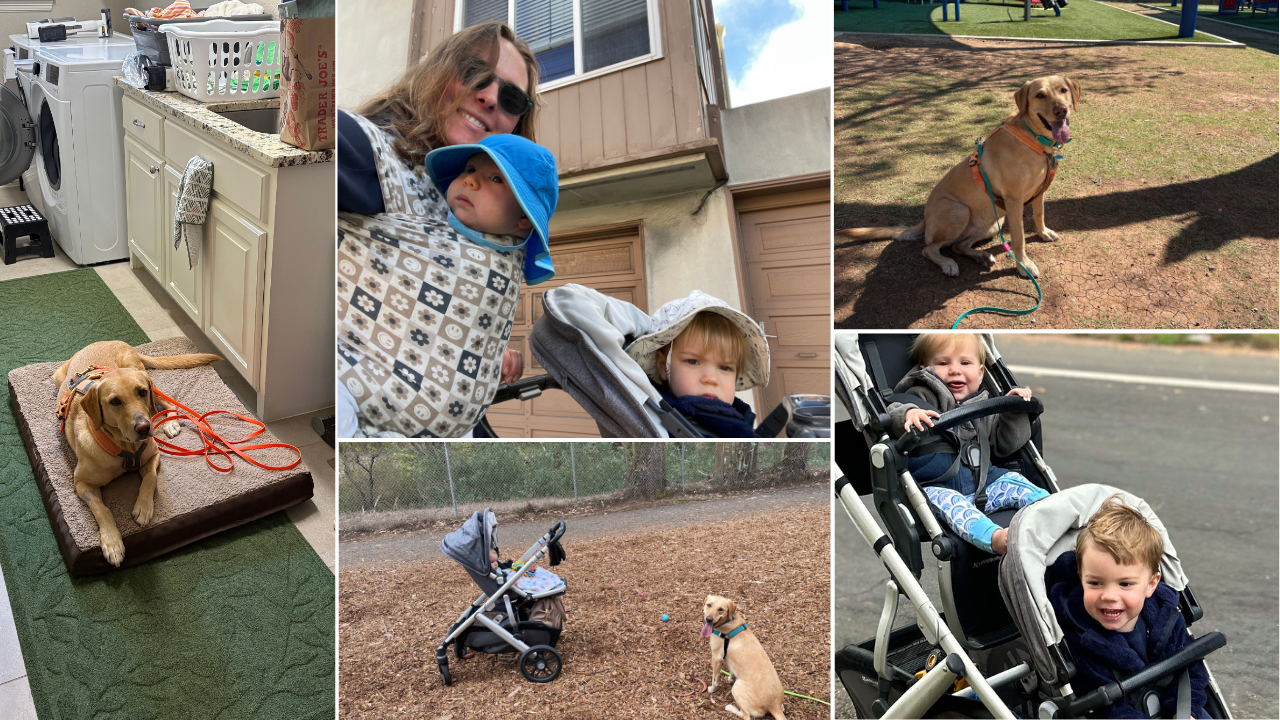
Emme here, a mom to 2 toddlers and a young dog. The kids, Izzy, and I have spent countless hours outside walking around San Francisco and exploring the country during road trips. Some outings have been easier than others, but we’ve learned a lot in the process and know practice makes progress! Let’s break it down - you’ll find tips, tricks, and tried-and-true product recommendations below.
After all those hours pouring over which stroller to purchase, you finally take the plunge, and it arrives! Only one problem - you pull it out of the box, and your dog is heavily side-eyeing it, or maybe even barking as if an intruder on wheels has entered the home. And suddenly you find yourself wondering how you’ll be able to take your dog and baby on stroller walks together.
Here’s the step-by-step plan.
First, watch this video for instructions on how to introduce your dog to the stroller.
Start with desensitization practice with a stationary stroller and its features before taking it for a spin. Some dogs find the folding and unfolding of the stroller or the umbrella's opening scary. Go slowly, as shown in the video.
I generally don’t recommend driving the stroller around your house, unless you have tons of space and it’s something you’ll do when the baby is here.
If you have a smaller space and a narrow hallway, pushing the stroller inside can actually sensitize the dog to the stroller.
Park the stroller by the front door or in a designated place and let the dog get used to it.
Once the dog doesn’t pay attention to the stationary stroller, practice walking with it outside. Start small, low stress, and low distraction, like your backyard or a quiet street.
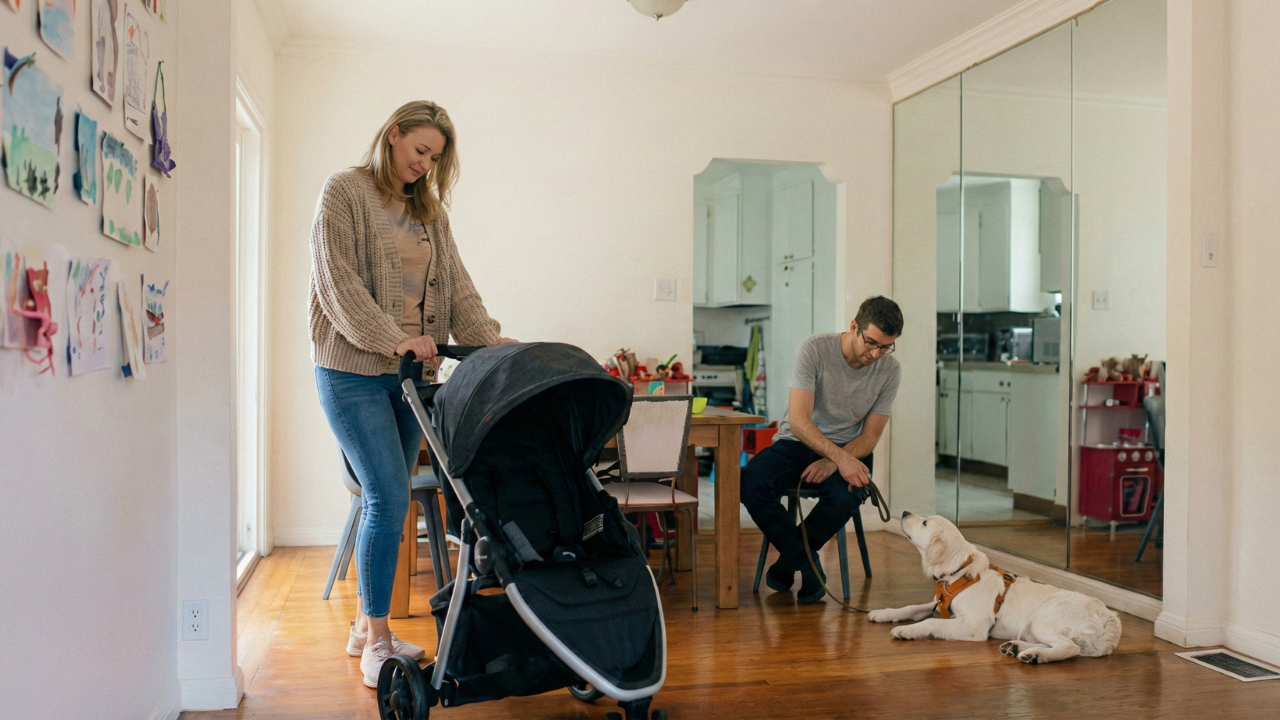
If possible, practice with two people first, one walking the dog and one pushing the stroller. Reward your dog where you want them to be for moving along the stroller.
Pro-tip!
If your dog pulls and zig-zags a lot, they may need loose leash walking training first. Having said that, many walk more easily with a stroller than without, as it gives them structure. When you start stroller walks with your dog, praise and reward them lavishly to create a solid foundation from the get-go.
Things to consider:
Be clear about the behaviors you’re looking for from your dog during a stroller walk.
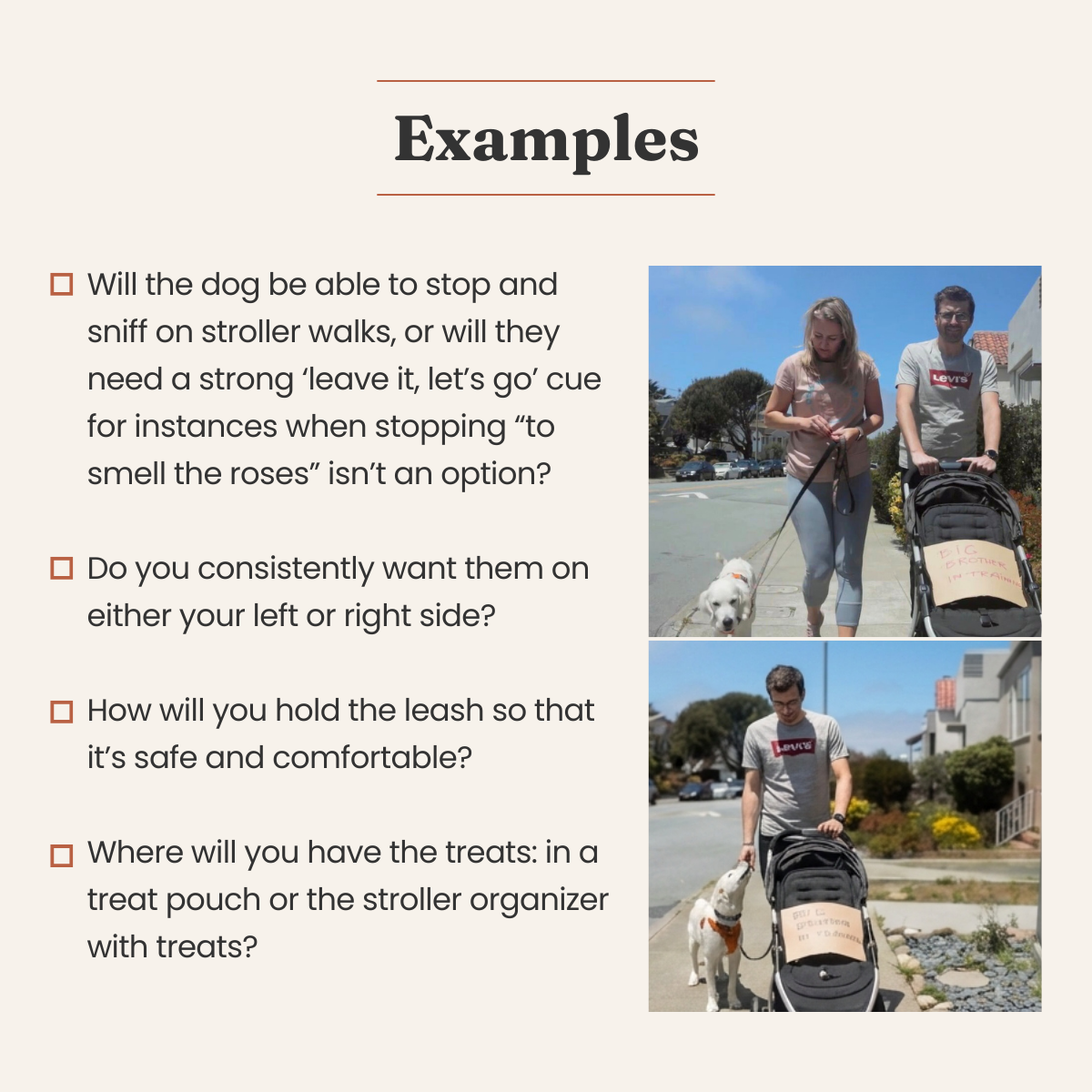
For families living in a city environment, after some reliable practice in low distraction and low stress areas, increase the difficulty by practicing stroller walks with your dog in a busier area with other people, dogs, and moving objects.
For families walking with 2 dogs, practice with each dog separately first. Once the dogs are ready to walk together, either keep them both on the same side (next to each other or one in front, one in back) or have each dog walking on different sides of the stroller. Many parents find hands-free leashes a helpful tool for multi-dog walks. Check out our Stroller Walks highlight for more inspiration from other Dog Meets Baby community members.
stroller tips, and training options (like loose leash walking and introducing an auto-sit to your stroller behaviors)? Check out the Dog Meets Baby Preparation Course!
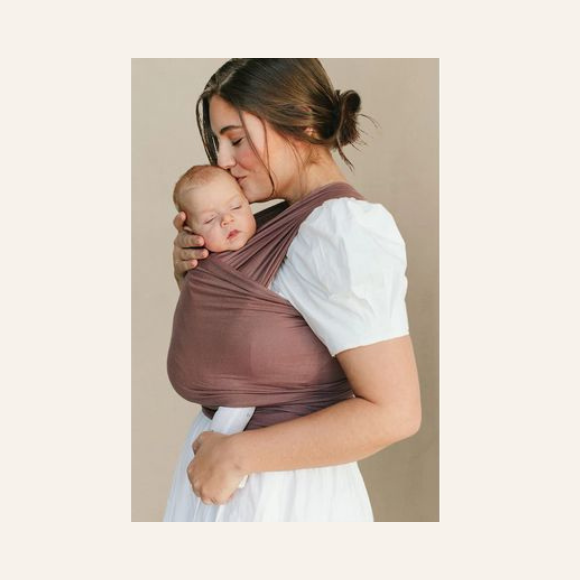

Solly Baby Wrap Carrier (code DOGMEETSBABY for 15% off) - amazing fabric, cute designs, cozy for both baby and I.
Vital Essentials Freeze-Dried Mixers -meal‑sized bag lasts a while, high‑value protein, low‑calorie, and keeps your fingers residue‑free.
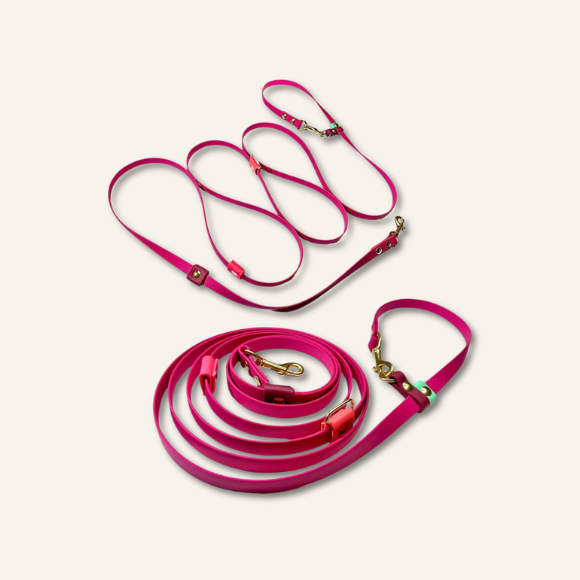
Trailblazing Tails Not-A-Knot Hands-Free Leash (code DOGMEETSBABY15 for 15% off) - variety of leash configuration options, durable, easy to clean, and fun colors.
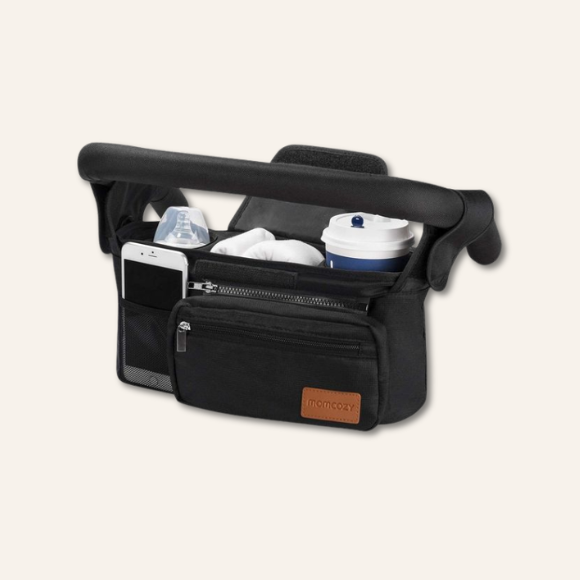
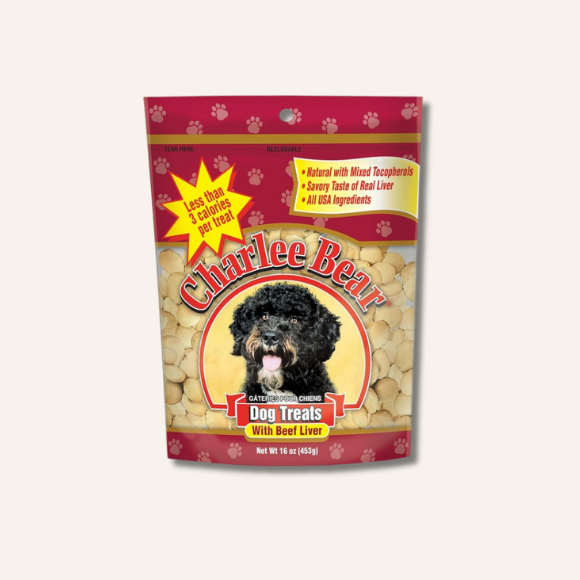
Stroller organizer - it’s where I like to keep dry treats, my fav are Charlee Bears.
Treat pouch - if you prefer a treat pouch, I like the one from RoyalCare. It is well-made and works great for "high-value" (hydrated) or freeze-dried treats because it’s so easy to wash. I can clip it onto anything, and it’s a great value since it comes in a two-pack. My dog trainer trick: I keep the pouch in the freezer between walks or training sessions!
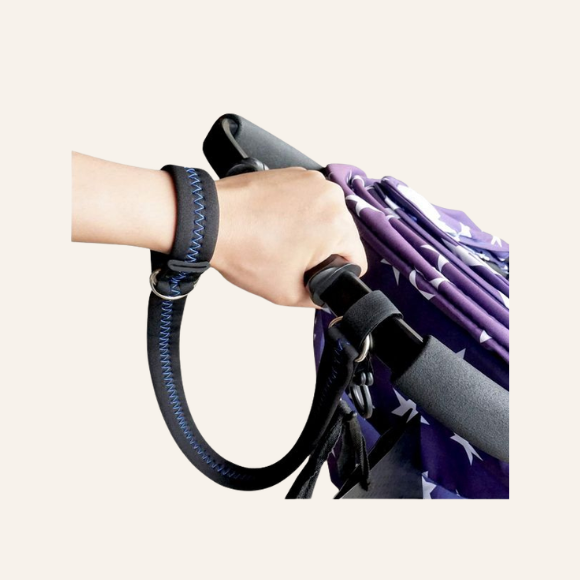
Stroller wrist strap - when you have a newborn and are sleep-deprived, it is easy to get confused. I accidentally let go of the stroller, thinking I was letting go of the leash because it was tangled. On a small slope. I caught it, but it was so scary. As soon as I got home, I ordered the leash for the stroller.
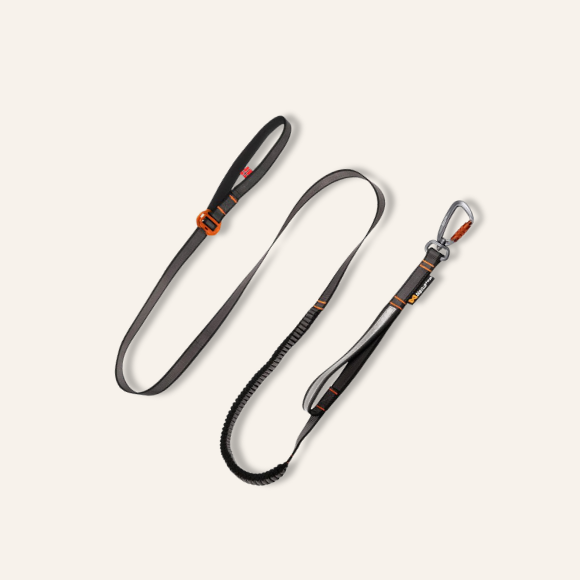
Non-stop dogwear Touring bungee adjustable leash
Use code Dominika for 10% off
This leash is an investment, but we’ve had ours for 3+ years, and it still looks like new. It can be used as a regular leash or as a hands-free leash, and this is the most comfortable hands-free leash I’ve ever used. The twist-lock (read: extra safe) carabiner is rated to 300 kg (660 lbs)! When you’re pushing your baby in a stroller, this is exactly the kind of security and comfort you want. If you need to stop and tend to your baby, you can quickly secure the leash around a tree or a pole, a feature I love and use a lot.
Use code DOGMEETSBABY for 10% off
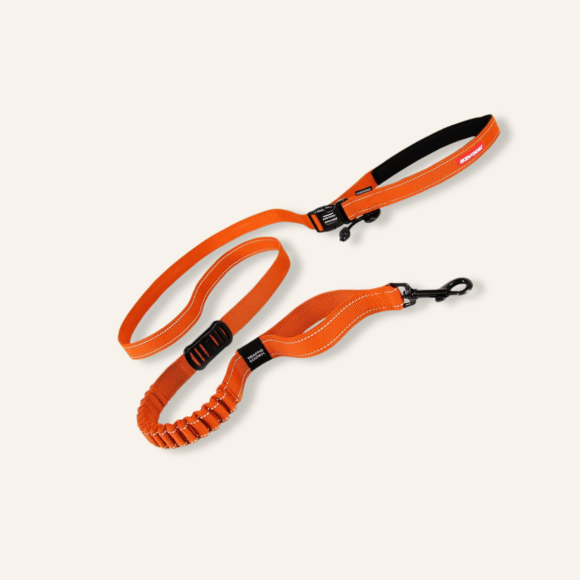
A close 2nd! If you have a puller, this leash is golden. My dog Lola never mastered loose leash walking despite being in training her whole life. We got to a decent place with training, and supplemented with this leash. It has Zero Shock™ technology, which cushions pulling force to protect both you and the dog’s joints. My husband, who is a runner, loves this leash for running with Hela. Great hands-free leash.
it’s possible to still practice these behaviors beforehand using a shopping cart.
Or if your dog is used to walking next to a shopping cart already, I’ve found this behavior transfers rather easily. Pet stores or hardware stores tend to be great dog-friendly indoor training options; just be sure to call ahead to double-check their policies.
An alternative option would be to bring your dog to a pet-friendly stroller store if you’d like to test drive the different stroller models before selecting one. This way, you can find the perfect stroller AND get some walking practice.
For an added layer of realism, try practicing with baby sounds during your stroller walk training. This step can be introduced once the dog is confidently walking outside with the stroller and has successfully practiced with baby sounds indoors. Wrap your phone in a swaddle blanket, play a selected track from the Baby Sounds Library, set it in the stroller seat, and off you go!

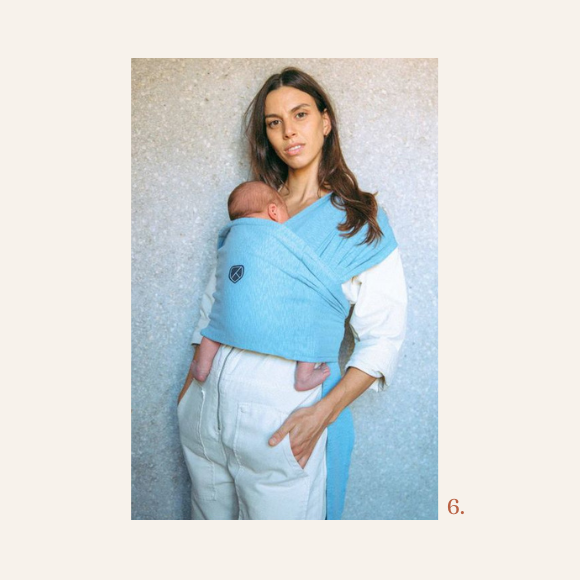
This was my preferred mode of transportation for the early months of newborn + dog. Once you get the hang of the wrap and positioning technique, it’s fast, cozy, and allows for all sorts of hands-free activities. Plus, I loved that I had more flexibility to let my dog sniff and swerve on our walks, an opportunity the stroller does not afford.
Just like with the stroller, you may want to practice babywearing (either with a doll or swaddled baby-sized item) before heading out on your first walk. The sight and sounds of a baby bundled onto a caregiver’s chest can be triggering for some dogs.
Finding your preferred carrier can sometimes take some trial and error, especially since your preference may change between the newborn and infant days.

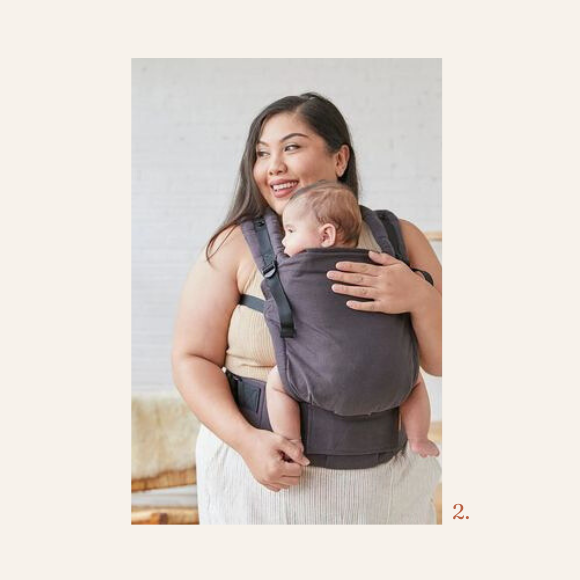
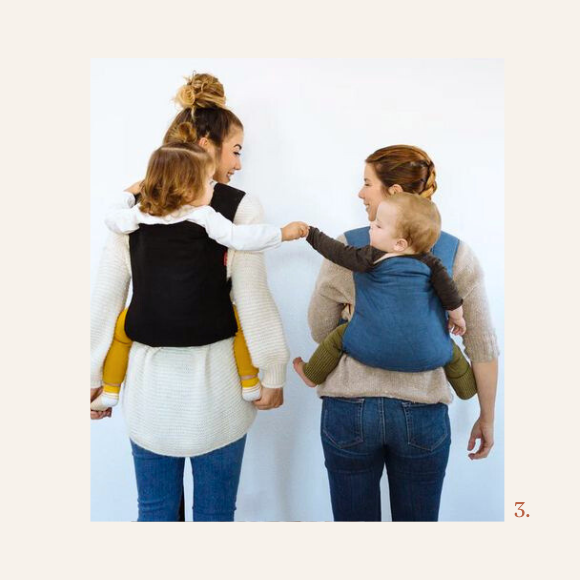
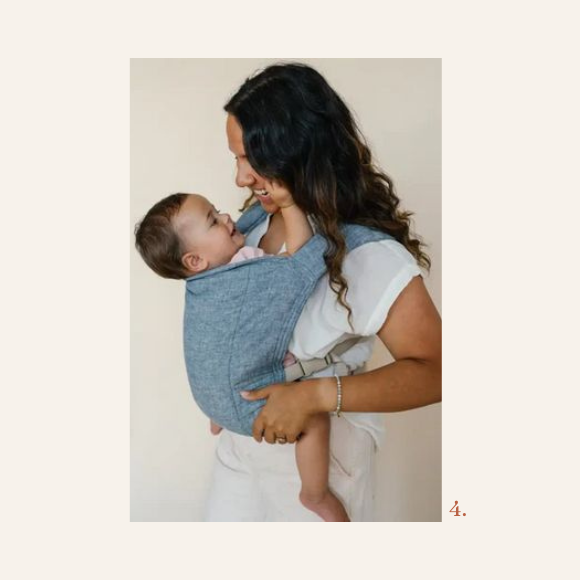
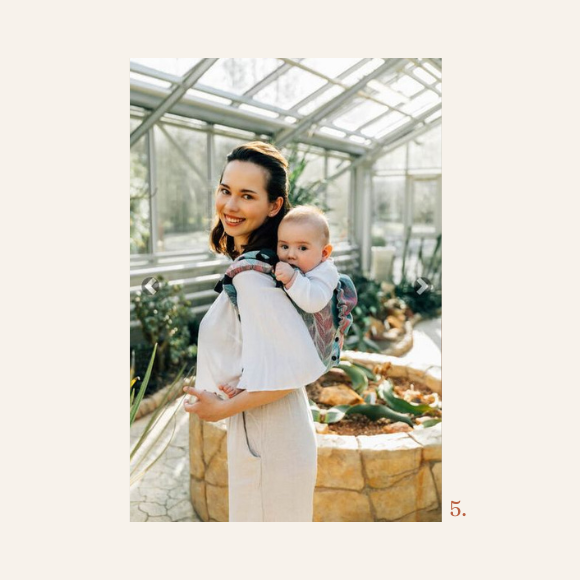
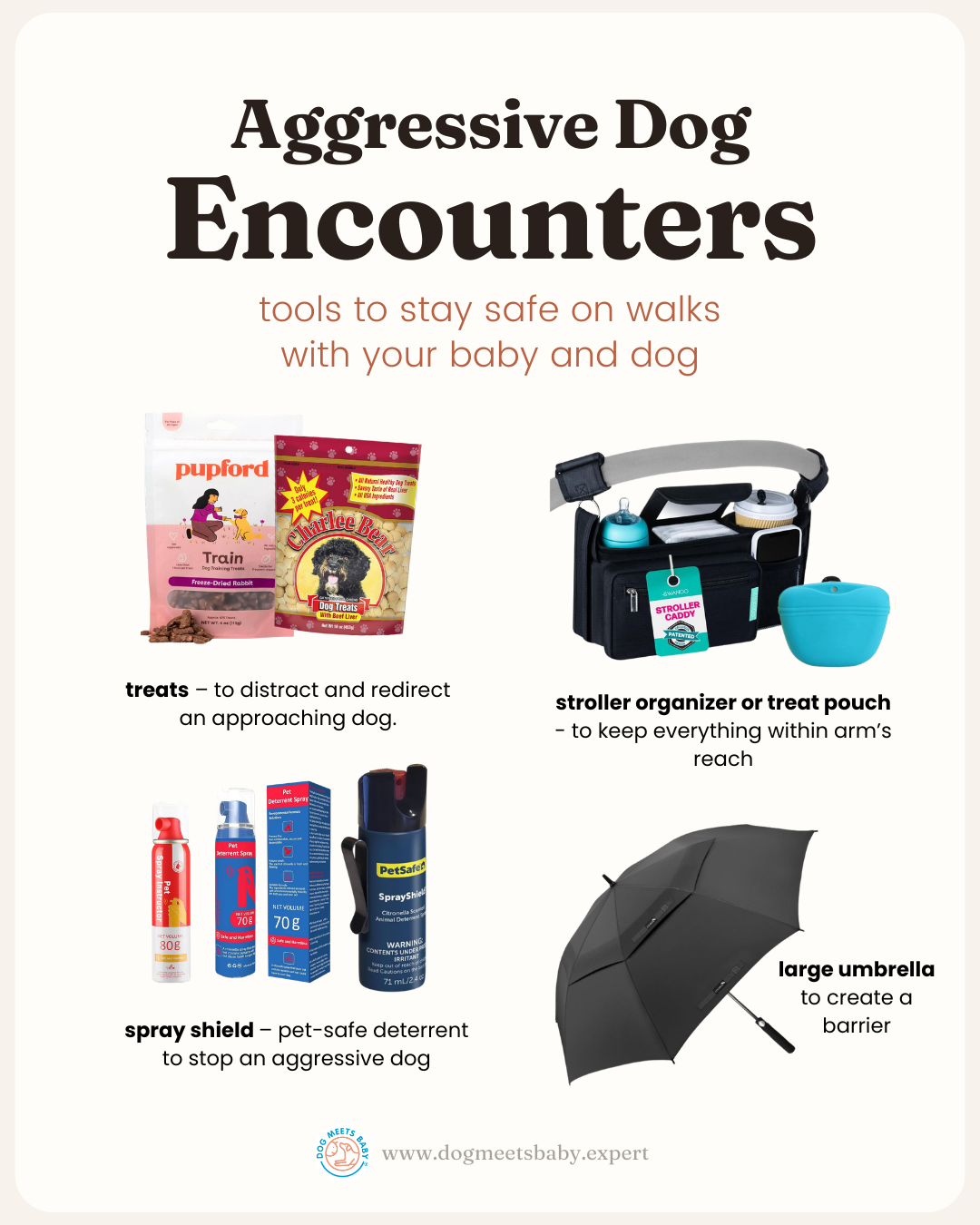
A common worry is how to keep your baby and dog safe when an unknown dog approaches you while you’re out.
Here are my top tips:
1. Carry treats in a stroller organizer or treat pouch.
Throw a handful at the stranger dog (aim at their head) and keep moving.
Keep your dog on a short leash so they don’t try to get some of the treats when you throw them.
2. Carry a spare leash, e.g., have it folded in half in an easy-to-grab spot. When a dog approaches, grab the end of the folded leash and swing in a circular motion towards the dog to create a "barrier of motion."
3. Keep a large umbrella in your stroller to create a quick barrier and scare the dog away if needed. Pro-tip: Desensitize your own dog to the sound of the umbrella opening before trying this on a walk!
4. Sprayshield — If you walk in areas with strays or off-leash dogs or if you or your dog have already been attacked, this will give you peace of mind. Please make sure you know how to use it before you ever need to.
5. Use your voice. Shout to further distract the dog. Some parents said STOP, some AH AH, and some reported they yelled SIT, which worked.
Don't forget the wrist strap attached to the stroller’s handlebar for accidental slips or trips.
Watch this video to see how I use the items listed above. Stroller safety straps, and other gear to stay safe on your walks can be found here.
Never attach your dog’s leash to the stroller handlebar or frame. In the event your dog lunges, pulls or bolts, we don’t want the stroller going along with them. While it’s a huge safety risk with a child inside, you also risk damage to the stroller as well as emotional and/or physical injury to the dog.
While babywearing, put your dog’s collar, harness, and leash on before loading the baby into their carrier. Some dogs can have a reaction to seeing the baby lean into their space if you’re babywearing while attaching the dog’s equipment. For extra fun and advanced training, I taught Izzy how to pick up her leash and hand it to me! This trick always came in handy when getting ready to head out the door - I could place the baby in the wrap, then have Izzy deliver her leash handle to my hand from the ground. Plus, this trick training was extra enrichment I could do from a seated position while hanging with Izzy and the baby in those early weeks.
You may not feel comfortable taking your dog and baby out for a walk together, and that’s OK! Dominika and I have both experienced this at various points in our raising dog + children journeys. A determined dog with a high-prey drive or reactivity, steep hills, wildlife, or the presence of other people + kids, and a heavy stroller with multiple kids can simply feel too overwhelming or unsafe.
During this period, Dominika only took Lola on walks when her husband pushed the stroller, and I, Emme, opted to move my time with Izzy to the backyard while putting walks on pause for a bit. When circumstances changed, and we had more capacity to take our dogs on stroller walks, we started bringing them along again and made sure to brush up on our stroller walk training beforehand, too.
When walks aren’t an option, or they’re causing more behavioral complications than help, consider giving your dog alternative enrichment opportunities for their mental and physical health. We love this book for enrichment ideas at or around the home. Plus, there are different sections for food-based, environmental, or play-based enrichment opportunities!

Pro-Tip!
The best part of walks for your dog is the SNIFFING. If a full walk isn’t in the cards due to behavior concerns or caregiver ability, use outdoor sniffing exploration to your benefit.
Toss kibble or treats in the grass, hide a few toys in the backyard, or just let them explore the natural scents already there. Many owners find a long leash (10-20ft) helpful to give their dogs less resistance while exploring if activities aren’t taking place in an enclosed space. A shorter walk, while baby can be with another caregiver, filled with plenty of sniffing opportunities, is just as beneficial (if not more) than a long stroller walk without any stops to smell.
Dominika’s favorite long leash
Biothane custom long line from High Tail Hikes
Choose the size of the dog (small, medium, large) and the type of leash (brass or sports carabiner) and the length. I personally like 20ft long leash, 15ft is a bit too short, 30ft a bit too long. Use code DOGMEETSBABY10 for 10% off
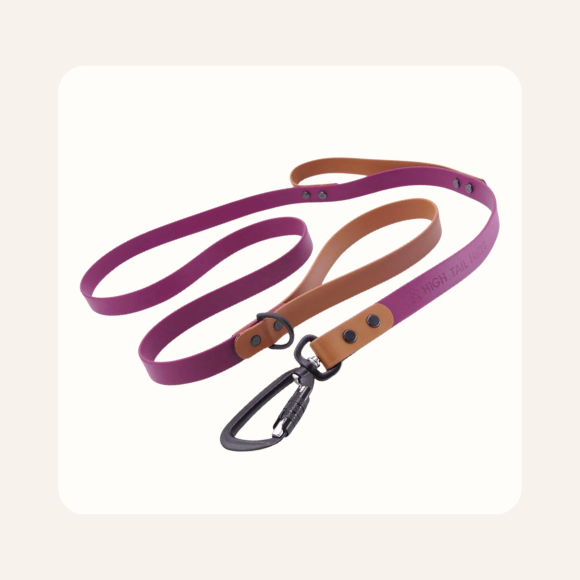
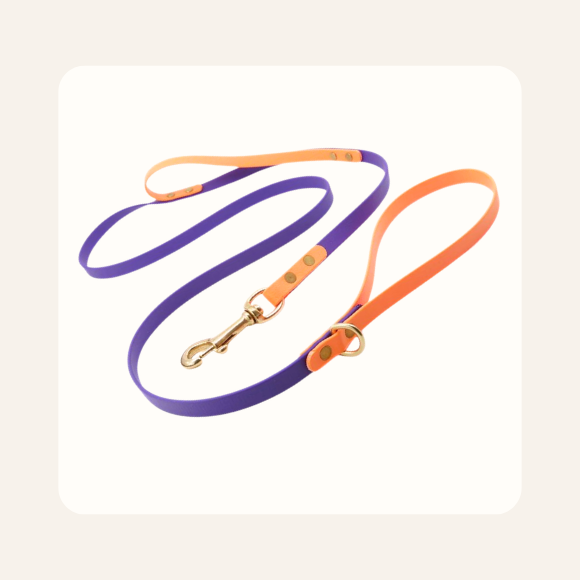
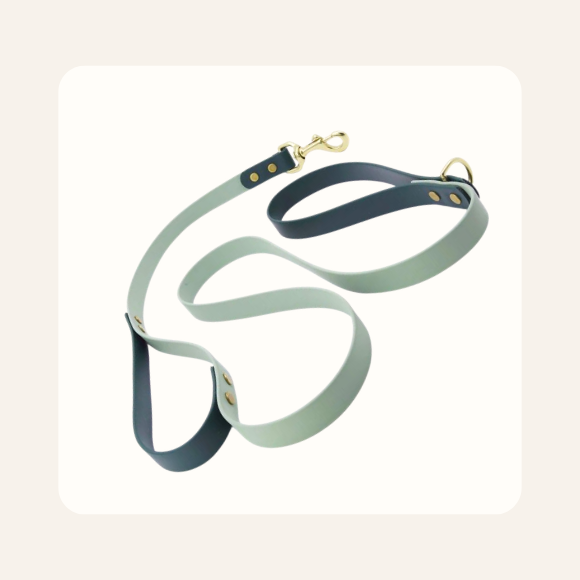
Before you know it, your toddler decides it’s time to ditch the stroller and insists on walking the dog too! Except toddlers walking dogs independently isn’t safe……so what are your options?
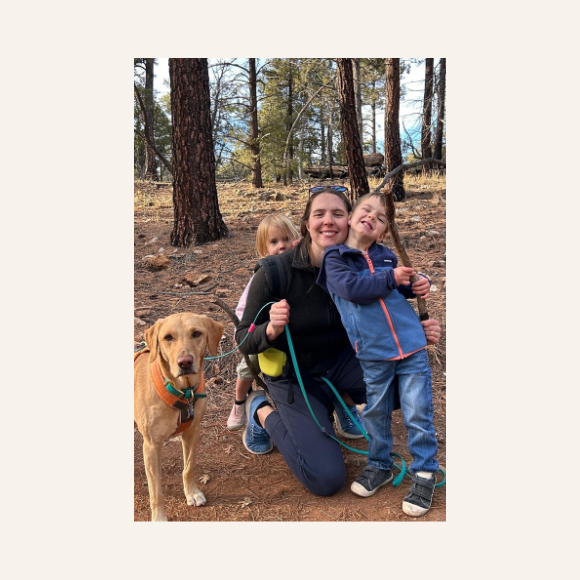
This reel shows one alternative - attaching a separate second leash to your own. The adult holds the main leash that connects to the dog’s collar or harness, responding to any sudden pulling or direction changes, and the child’s leash is attached to the adult’s. We love these handsfree leashes for their durability, unique color combos, and functionality of various attachment points.
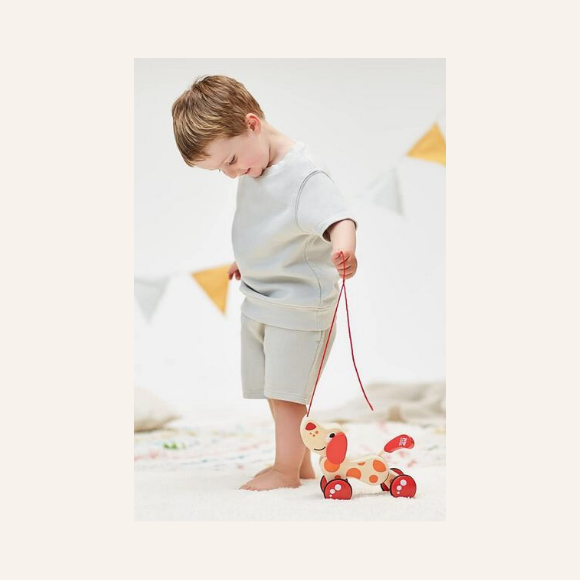
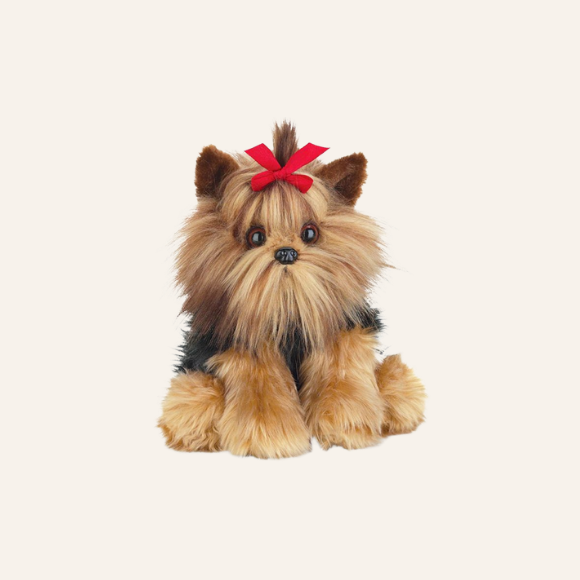
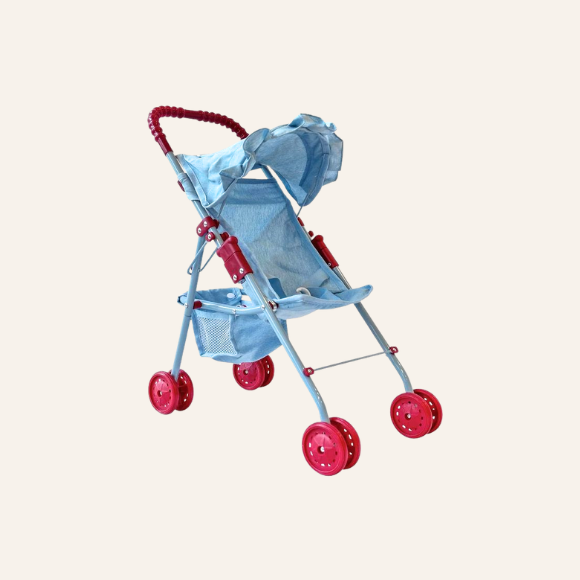
Another option is having your child bring their own “dog” along for the walk. Both Dominika and I have loved this Wooden Walk-A-Long Puppy for our kids and can attest to the many miles it’s joined us for. Other fun options would be pushing a dog stuffie in a play stroller or shopping cart.
Hoping these tips have helped you feel more confident as you prepare to navigate life with a baby and a dog. You’ve got this! 💛
-The Dog Meets Baby Team
Save it, pin it, and pass it along to someone who needs it!

Online resources to help your baby and dog get along—right from the start and as they grow up together.


%20Before%20the%20Due%20Date.png)
.png)