About

Products
Freebies

Dog Meets Baby (Blog) is reader-supported. When you buy through links on this page, we may earn an affiliate commission at no additional cost to you.
Many parents try a back seat divider to keep the dog away from the baby. Here's why dividers don't hold up in a crash, and where everyone should sit instead, with diagrams for the most common family setups.
Short answer: no. A back seat divider or a barrier will not keep your dog away from your baby in a crash.
Back seat dividers come in a few styles: mesh or fabric nets that attach to the headrests, and padded or pillow-style dividers that sit in the middle seat between passengers. Most are designed to keep dogs out of the front seat or to separate kids from each other, though some families use them to separate the dog from the car seat. They may slow your dog down, but a determined dog can chew through them or squeeze around them. More importantly, they don't restrain your dog. None of them are designed or tested to protect anyone in a crash.
Cargo barriers are metal grates between the back seat and the cargo area. They help prevent distraction but offer less crash protection than a crash-tested crate or harness. CPS founder Lindsey Wolko advises using only barriers that are securely attached and ideally made for your car, because generic barriers held in place by tension bars likely won't be strong enough in a crash. Some car makers sell grilles made for specific models and tested to the ECE R17 cargo standard, such as Volvo and Land Rover.
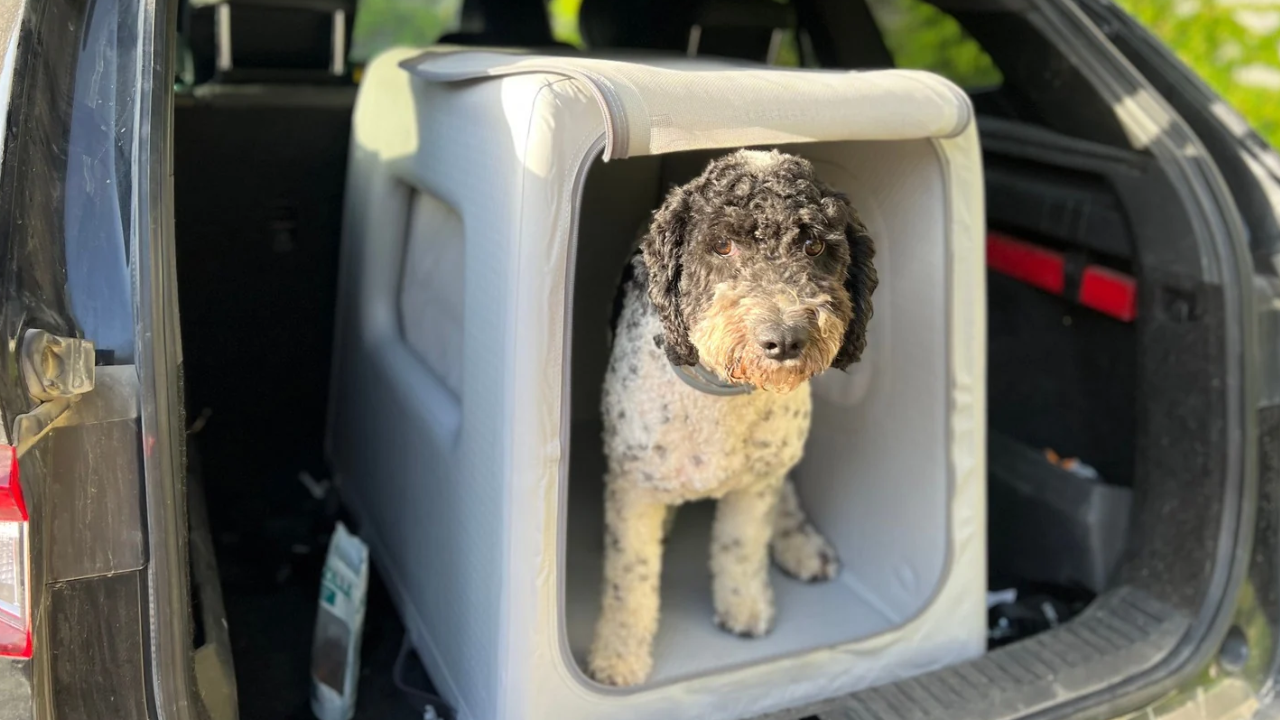
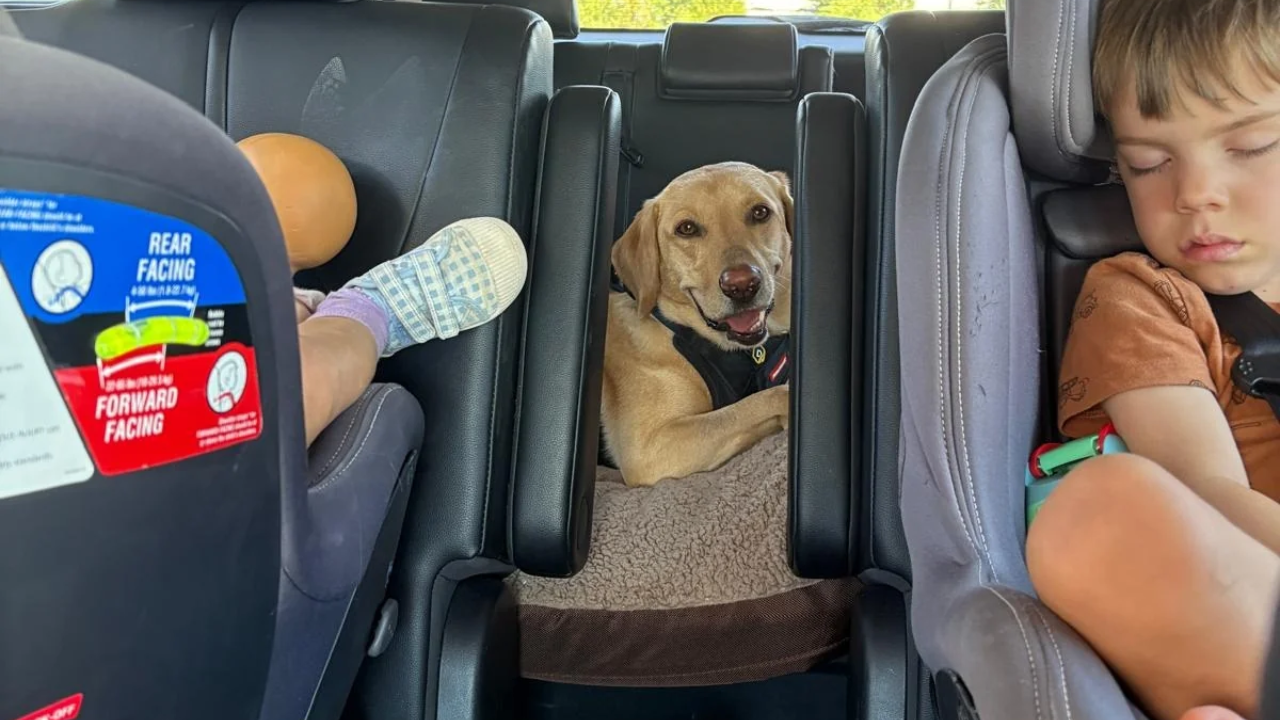
The rule of thumb - your dog is secured in a crash-tested harness, kennel, or carrier, and as far from the car seat as possible. Separate rows are best, especially with very young kids. Sharing a row works best with older kids and a dog who is relaxed and comfortable around kids (read how our dog rides between our kids in My Personal Journey to Car Safety). Find your setup below, then look at the diagram.
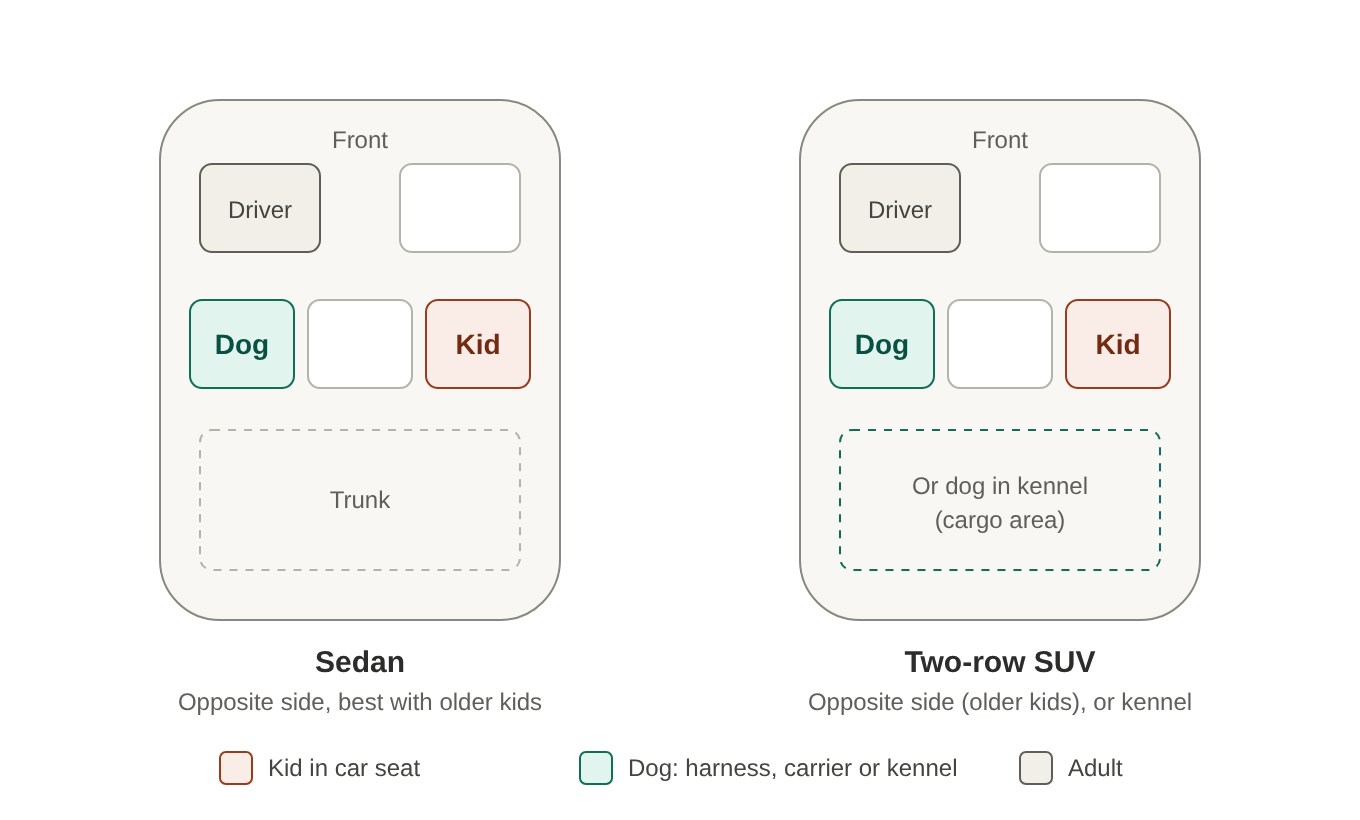
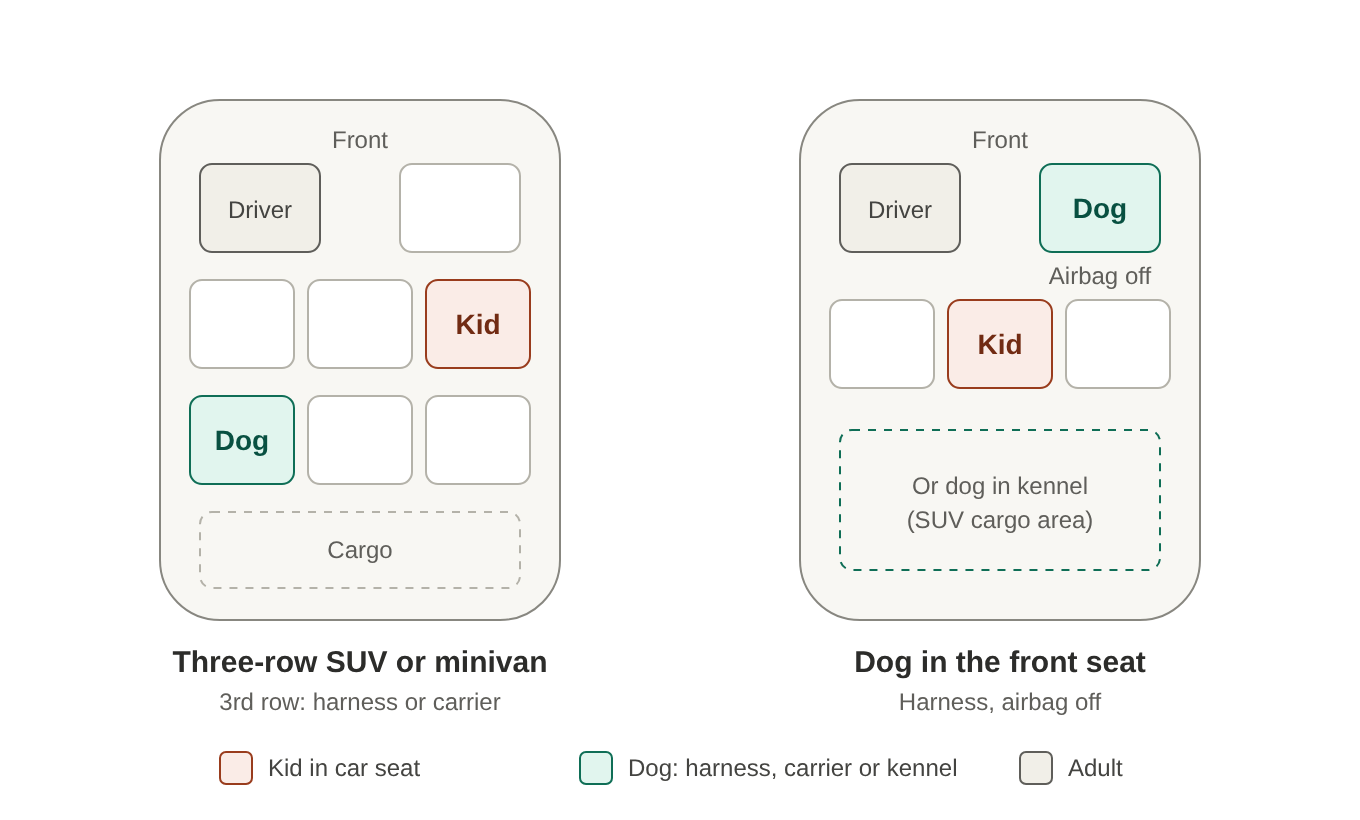
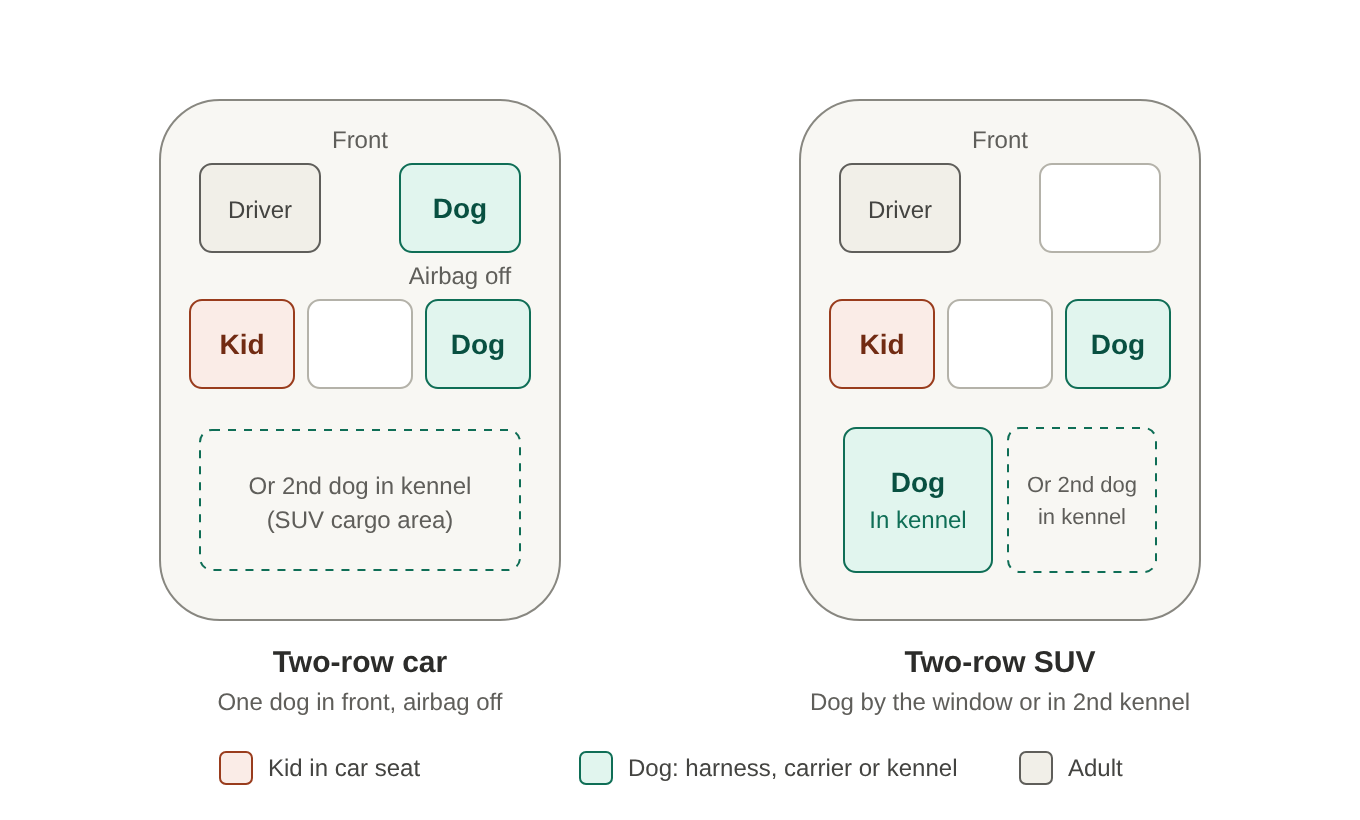
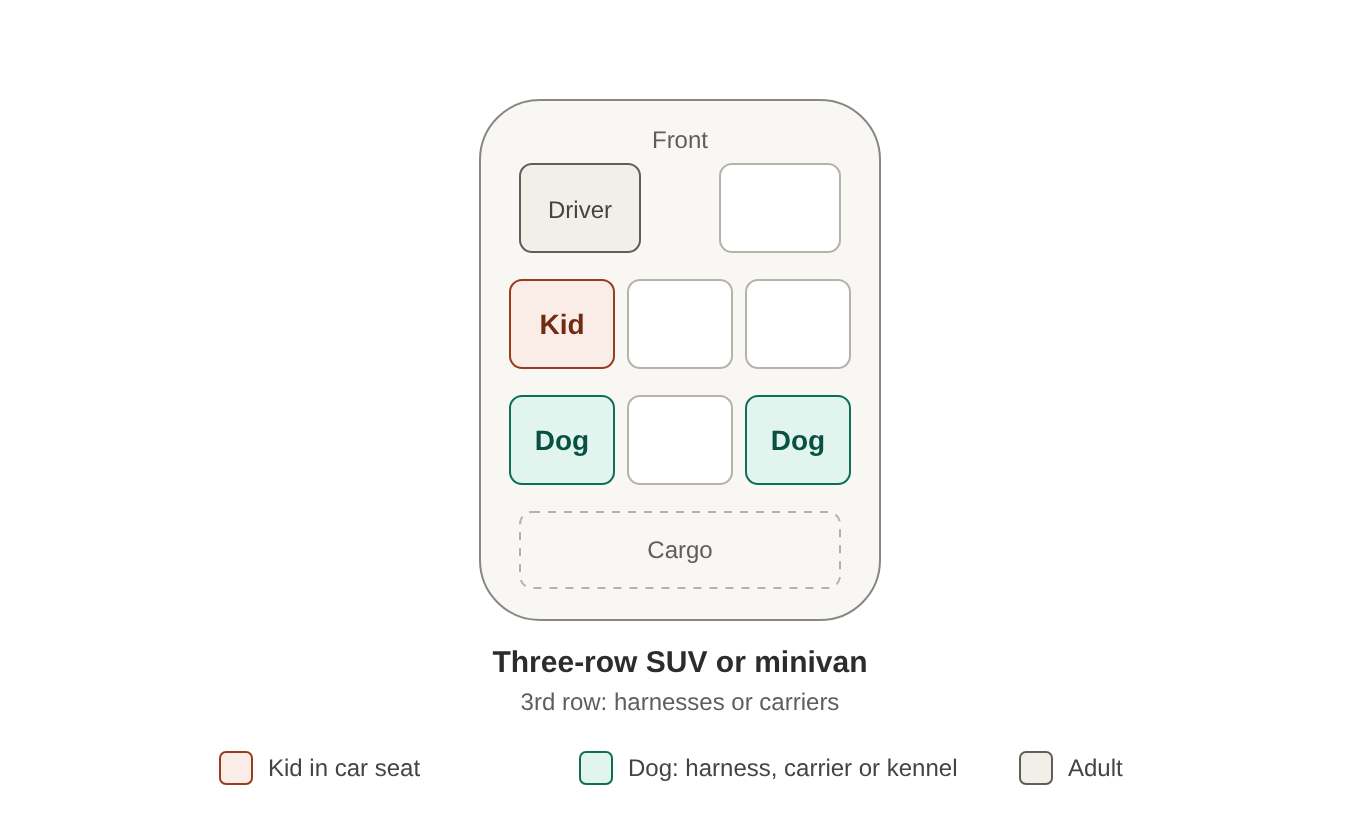
With two car seats in a two-row car, the dog is next to a car seat wherever it sits in the back.
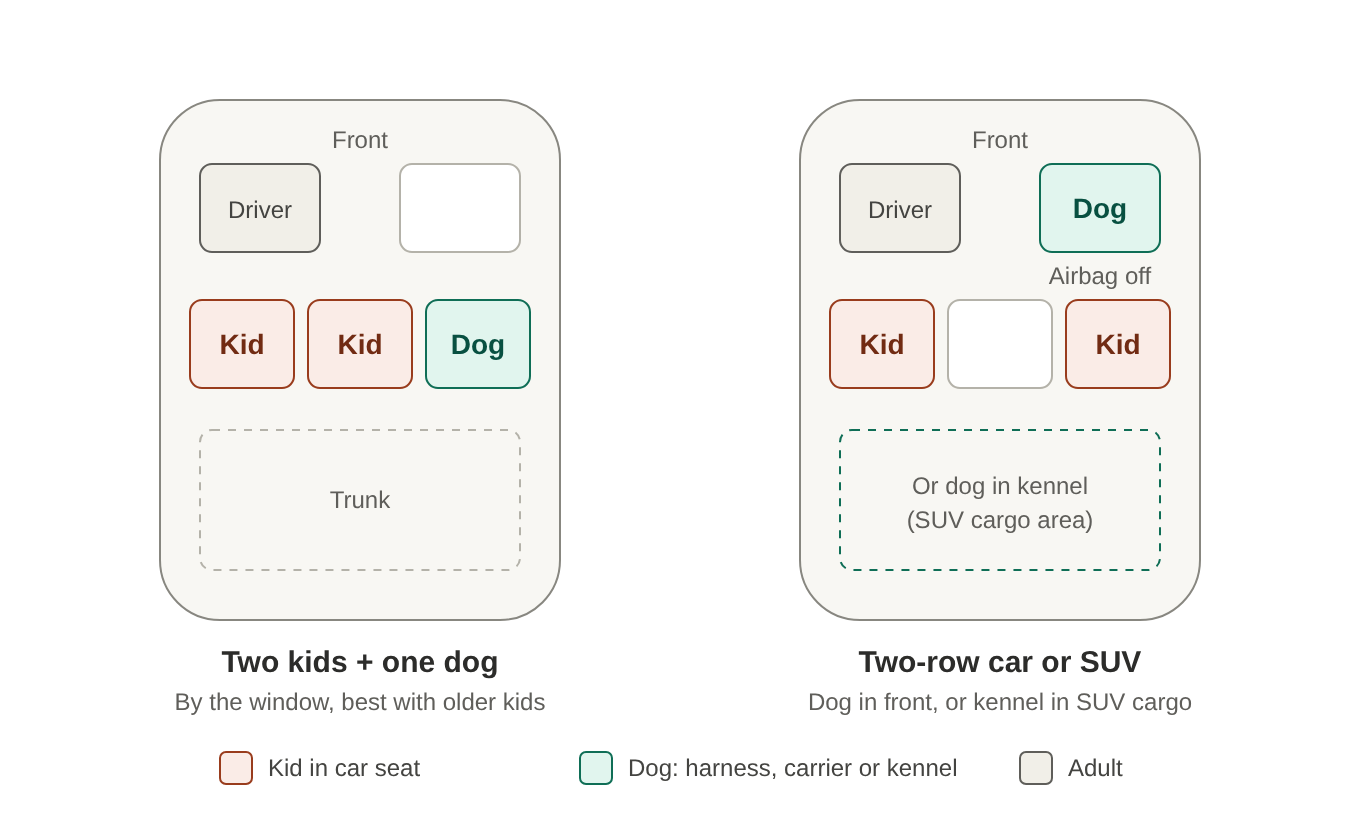
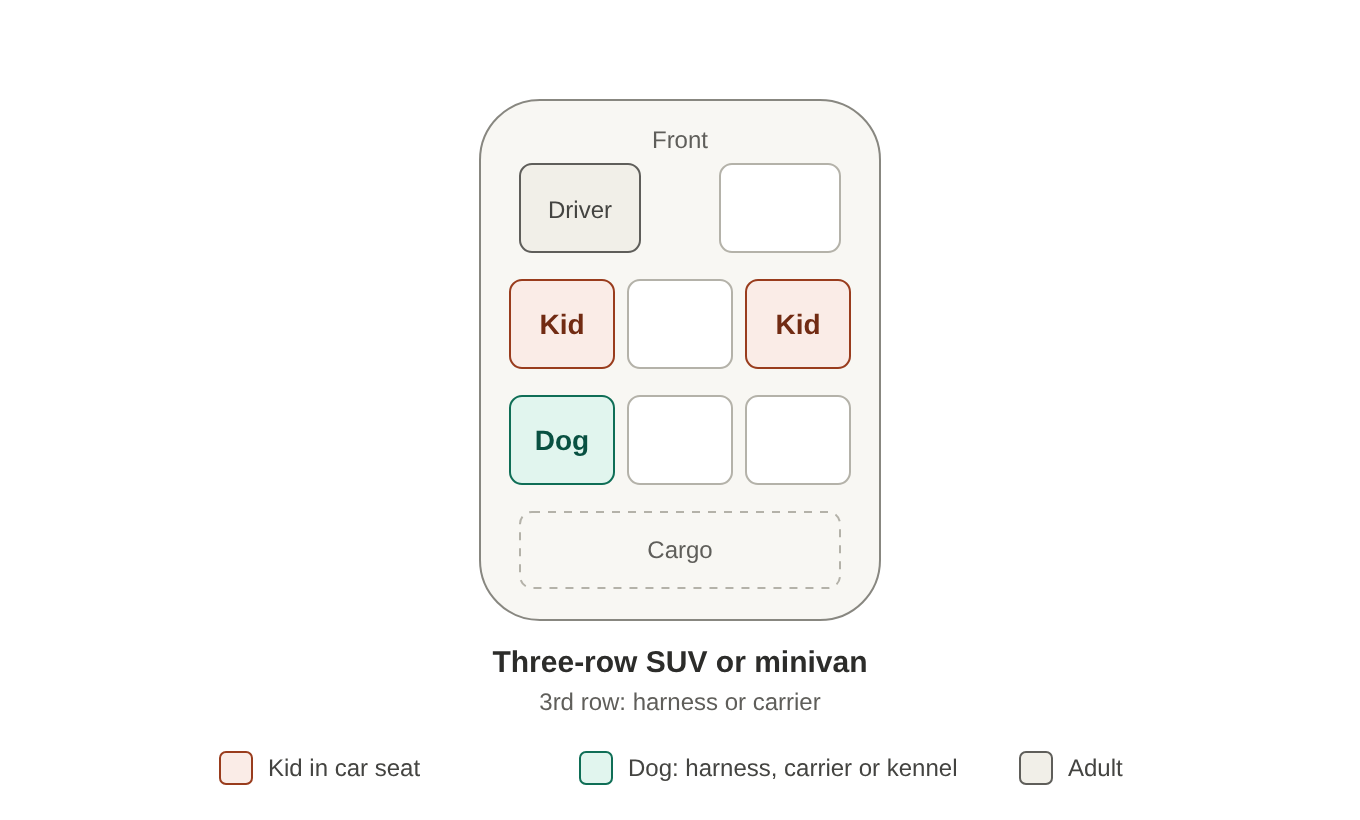
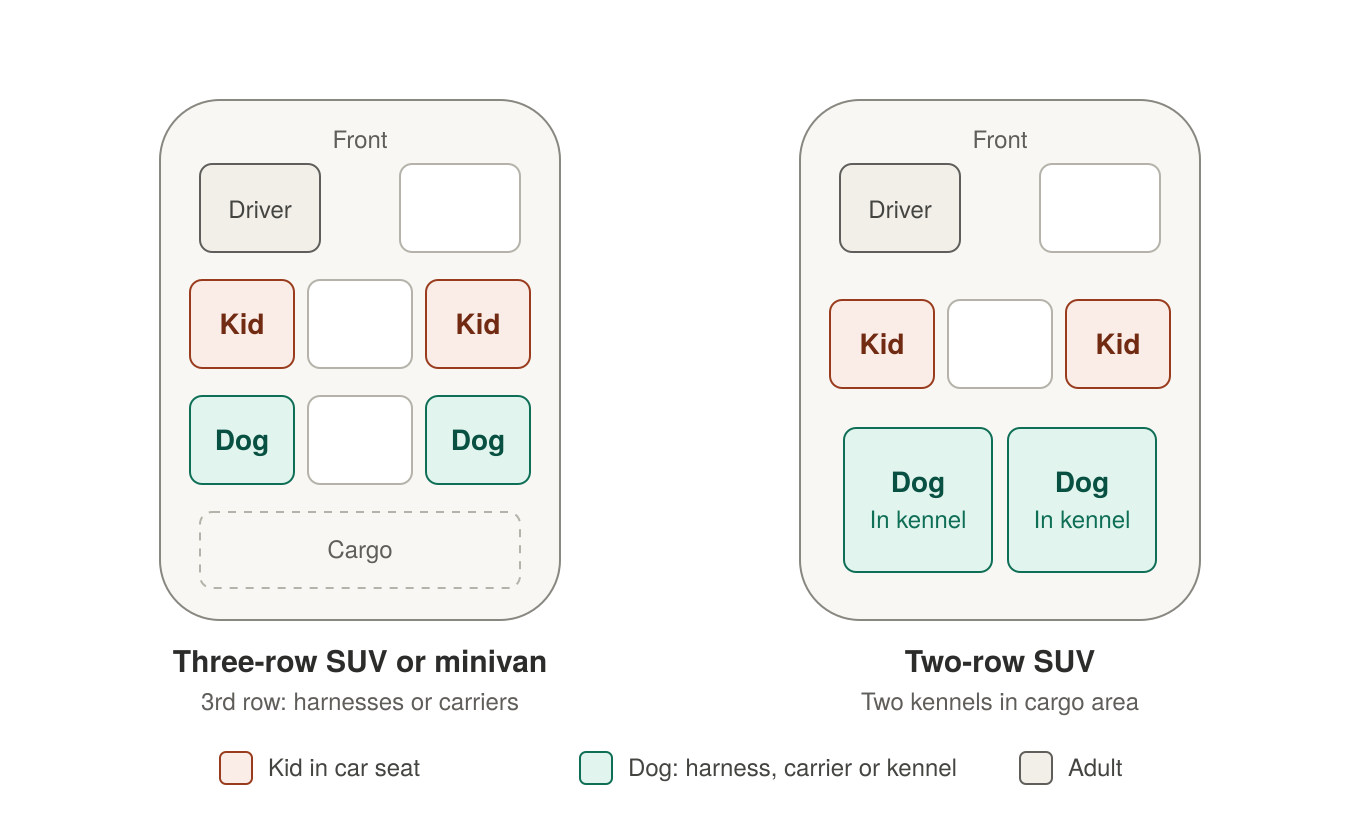
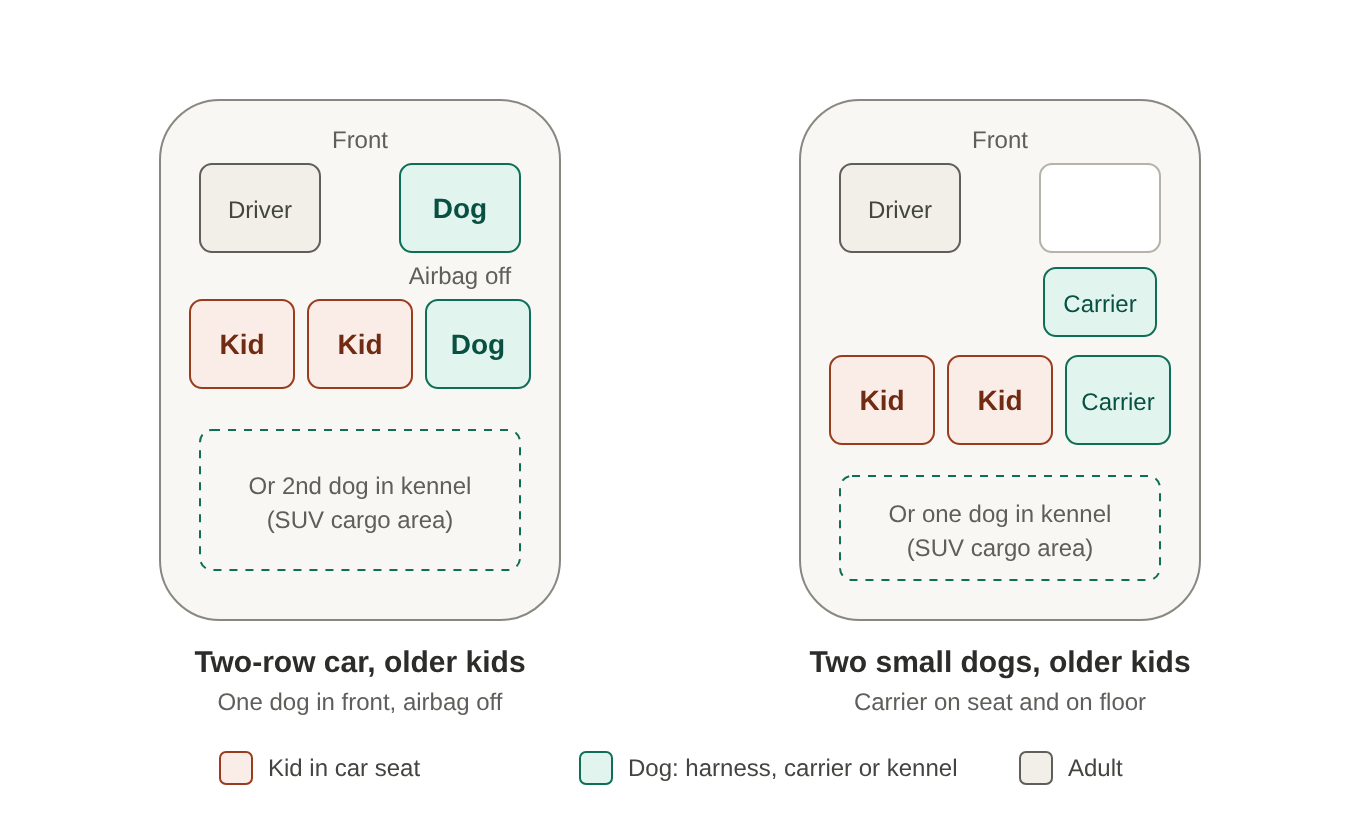
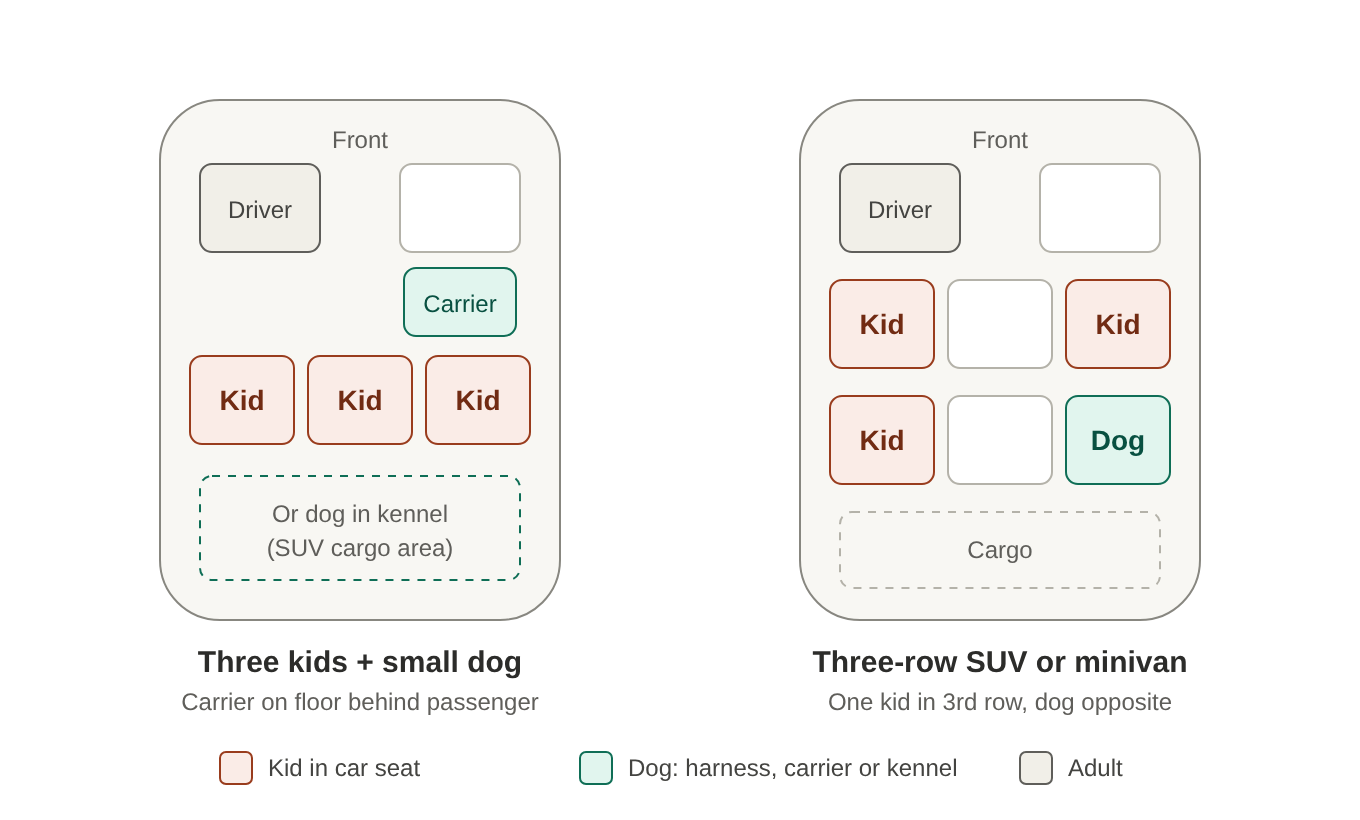
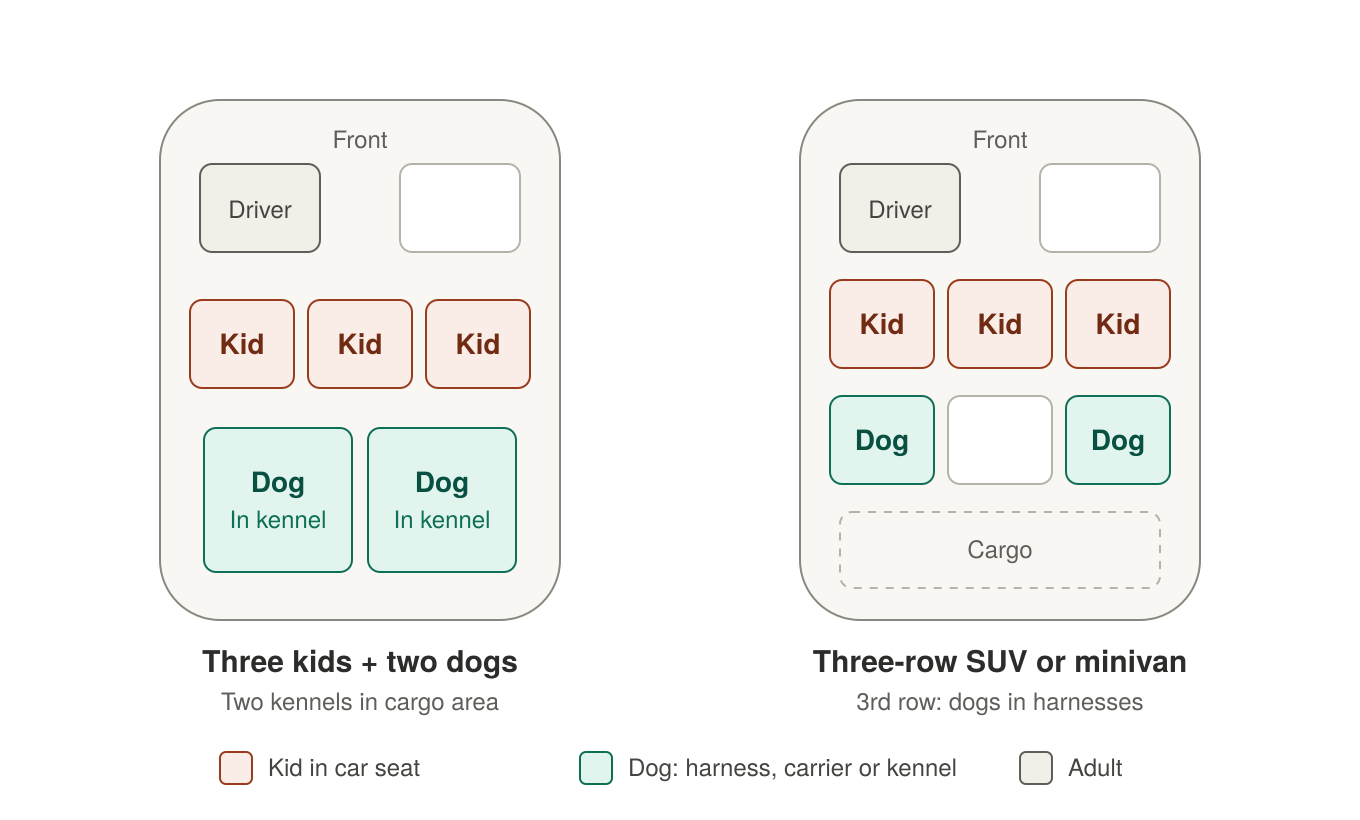
Car seat placement depends on your car and your seats. A certified child passenger safety technician (CPST) can check your install.
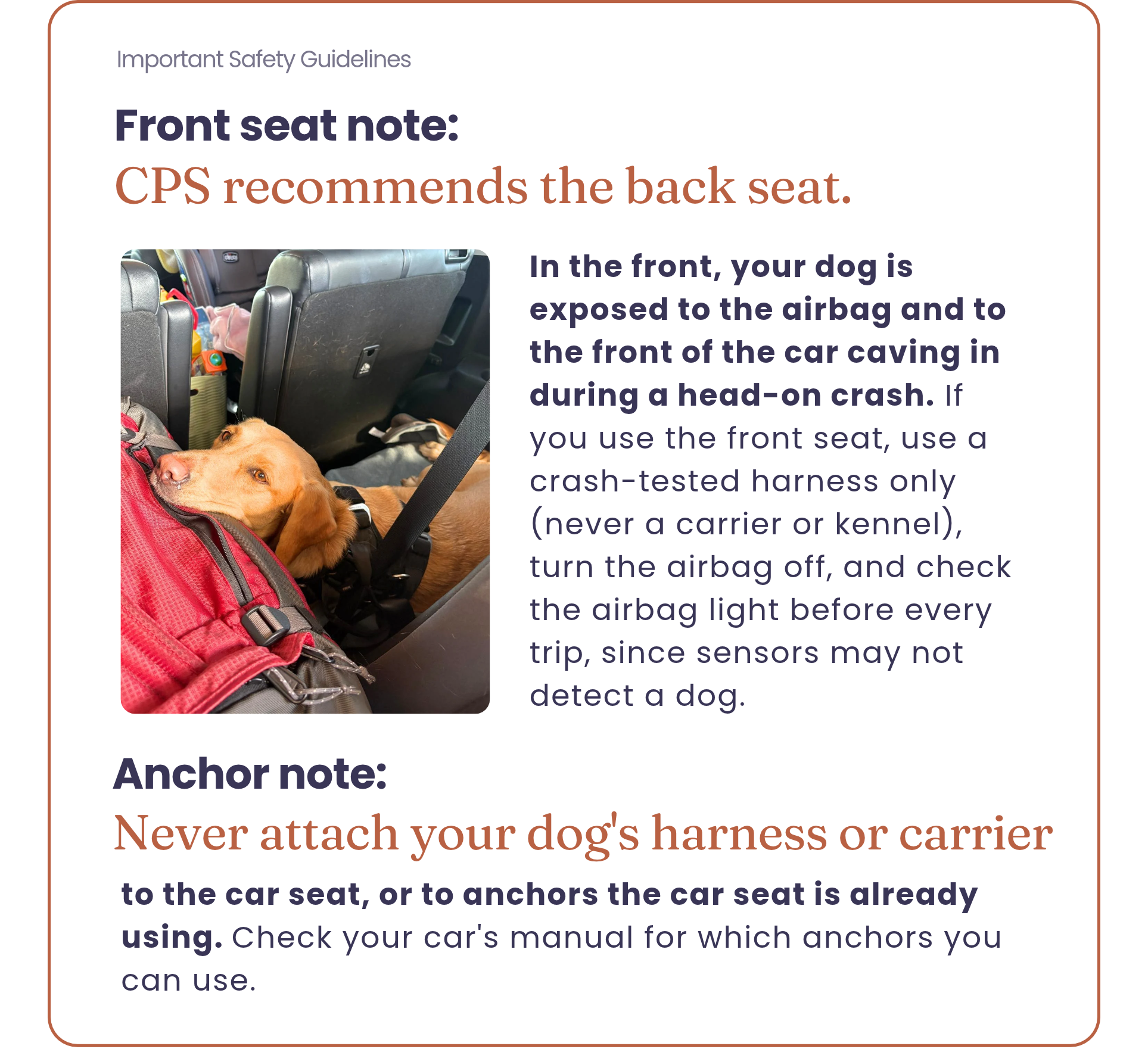
Secure your dog in a crash-tested harness, kennel, or carrier. If your dog would ride within reach of your child, for example, with two car seats in the back seat, put your dog and babies in separate rows when you can, especially with very young children. Not sure which product? Start with our picks by dog size.
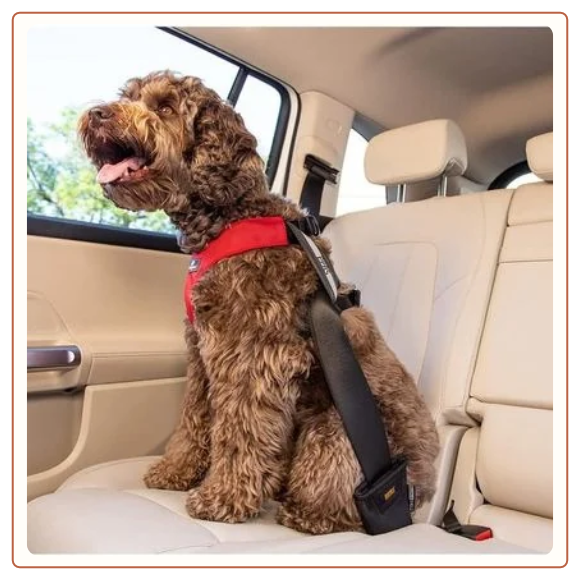
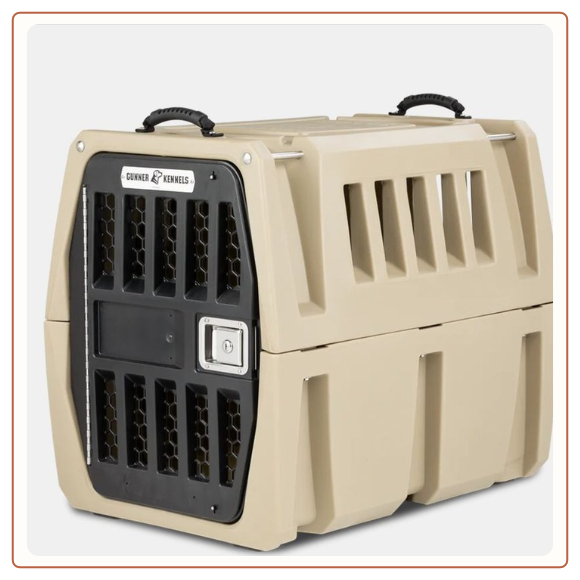
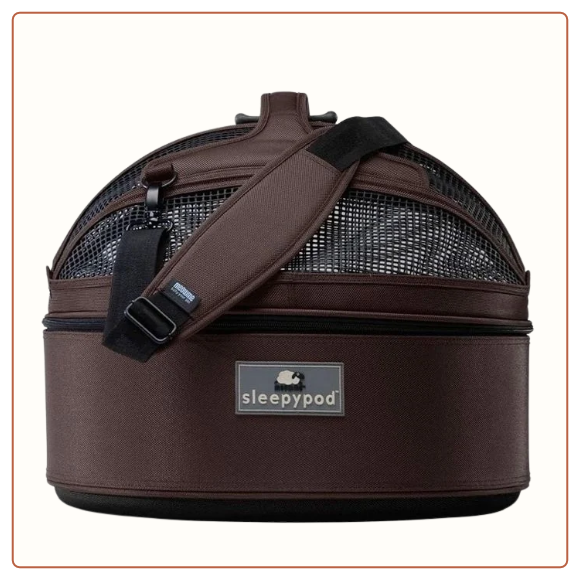
Our top picks:
See our picks: Crash-Tested Picks by Dog Size | Best Crash-Tested Dog Car Harnesses | Best Crash-Tested Dog Crates | Best Crash-Tested Dog Carriers
Are back seat dividers for kids safe? Kids' back seat dividers come in two main styles: padded organizers that sit between two car seats, and fabric seat covers that extend up between the seats. Families use them to keep siblings out of each other's space, and some use them to keep a dog away from the car seat. Car seat technicians advise against using anything that didn't come with your car seat or isn't approved by its maker, because it hasn't been crash-tested with that seat. A divider also won't hold your dog in place in a crash, so it's never a substitute for a crash-tested harness, kennel, or carrier.
Is a factory-installed dog grate safe enough to keep my dog loose in the cargo area? A reader asked: I have a Land Rover with the dog grate from the manufacturer. Is it safe enough to have the dog loose in the back hatch with the grate keeping them from becoming projectiles and away from the baby?
A factory partition tested to ECE R17, like Land Rover's full-height loadspace partition, is designed to keep pets and cargo out of the cabin in a frontal crash, so it does help protect your family. It doesn't protect your dog, who can still be thrown around the cargo area or escape after a crash. For your dog's safety, add a crash-tested kennel anchored with strength-rated straps, and ask your car's maker whether the cargo anchors are strength-rated.
Tip: Volvo's safety grille is crash-tested to ECE R17. Fit it only in the position Volvo specifies and facing the right way, and follow the fitting instructions exactly. Some models need steel roof mountings fitted first.
Keep reading: Choosing between a crash-tested harness, crate, and carrier | Best Crash-Tested Dog Car Harnesses | Best Crash-Tested Dog Crates | Best Crash-Tested Dog Carriers
Car safety is one piece of it. But the work that matters most - training your dog before the baby arrives, getting the first introduction right, knowing how to handle a toddler who doesn't understand boundaries yet - that's where everything changes. If you're ready to go deeper:




Disclaimer: This blog is for educational purposes only. Please contact your veterinarian, a certified dog trainer, or a veterinary behaviorist if your dog's well-being is at risk or your dog's behavior poses a threat to you or other people.
Author: Dominika Knossalla-Pado, Certified Dog Trainer & Founder of Dog Meets Baby
Online resources to help your baby and dog get along—right from the start and as they grow up together.