About

Products
Freebies

%20Before%20the%20Due%20Date.png)
Bringing a newborn home changes every routine, sight, sound, and smell your dog relies on daily.
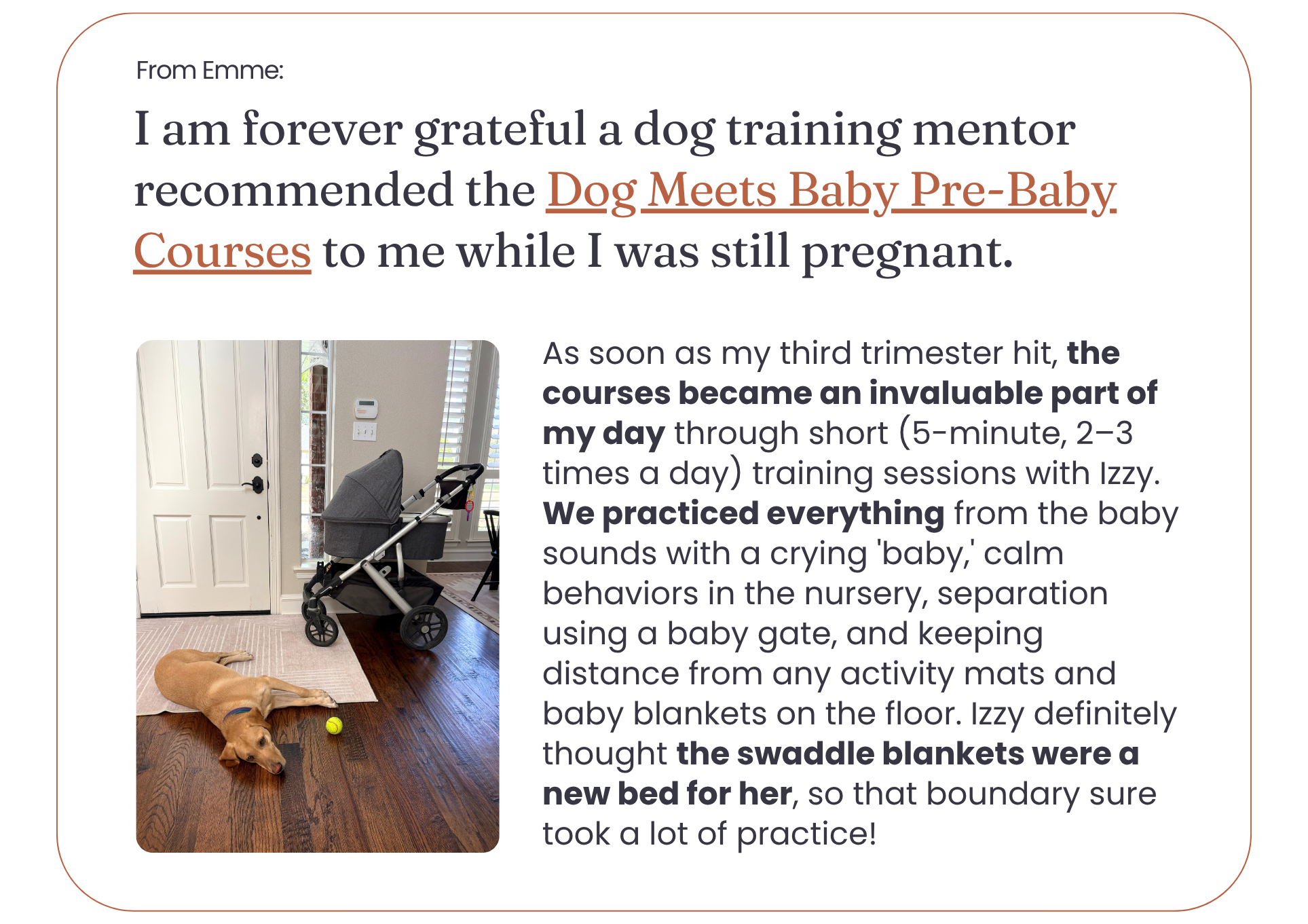
Starting pre-baby training in your third trimester (or even earlier if your dog would benefit from extra practice) gives your dog the time they often need to acclimate to new gear, baby sounds, and new routines. Preparation can’t guarantee a completely stress-free transition, but in my experience, prepared dogs adjust much faster, and prepared dog parents feel far more confident.
When writing this blog post, I asked Emme about her experience preparing Izzy for her first baby. Emme is now a Dog Meets Baby Junior trainer, but back then, she was a client taking the Dog Meets Baby Preparation and First Meeting Course. We didn’t even know each other yet!
If your dog isn't used to you sitting on the floor while paying attention to a (fake) baby on a playmat with hanging toys, they might try to grab the toys, climb into your lap, or decide the playmat is their new bed.
The hardest part for many dogs is understanding that you are giving your attention to the baby, and not them (or less), and that sitting on the floor isn't an invitation to climb into your lap.
If you’ve never walked with a stroller and practiced turning together or stopping at crosswalks, a herding dog might nip at the wheels, while a dog that pulls might drag you and the stroller right into the street.
Expecting a dog to automatically walk by your side without zig-zagging simply because you are pushing a stroller isn't realistic.
Many viral reels say, half-jokingly, that the hardest part of postpartum was the dog. Normal dog behaviors can become very frustrating when you have a newborn baby, are sleep-deprived, cluster-feeding, nap-trapped, or feeling touched out.
Whenever possible, I recommend training with the baby gear you already have, such as the playmat, bouncer, stroller, or changing table. Using specific training props during preparation isn’t just about getting your dog used to physical gear; it’s about setting clear boundaries and preventing anxiety or chaos, because your dog has already seen it, practiced, and knows what to do.

Below are our favorite pre-baby items to help prepare your dog for this exciting transition!
Concerned about how your dog will adjust based on their past experiences or current behaviors? Check out the course reviews for inspiration from other families who had similar concerns and have now welcomed their babies home.
Need personalized help? Dominika offers 1-on-1 Pre-baby Consultations.
A playmat is where your baby will spend focused floor time, making it a critical "baby-only" zone.
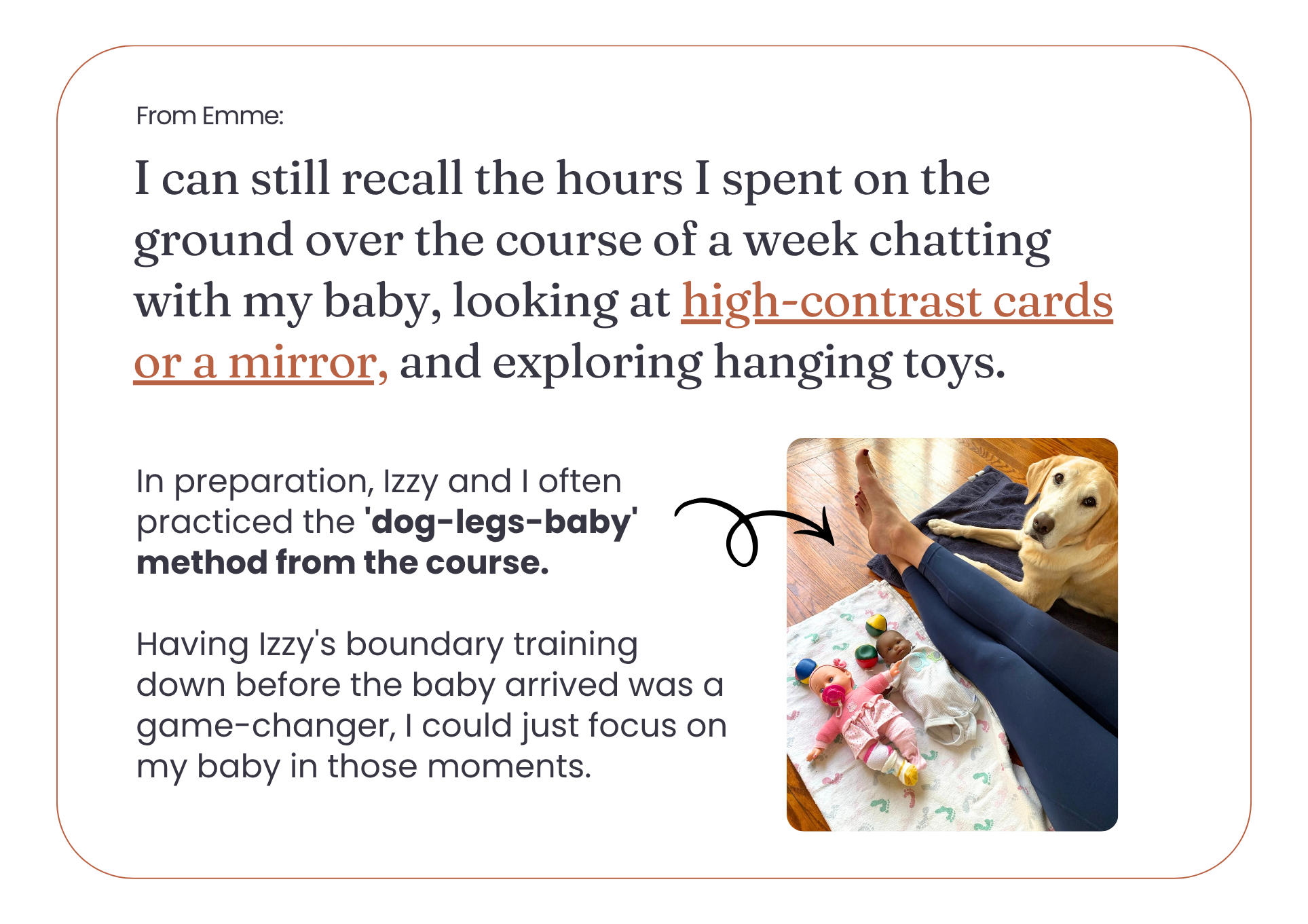
Training your dog to stay off the playmat or play gym prevents accidental stepping or rolling onto the baby and stops unwanted face-to-face interactions. It also teaches spatial awareness before a fragile newborn is actually lying there.
It only takes a second for a friendly dog to roll onto a baby. This actually happened to my son: my kids were on an activity mat, and my Labrador Retriever, Lola, approached because she wanted to be near me, sitting right on my son’s face. She was a 60-pound dog! She didn’t move! I moved her away immediately, and my son was fine and breathing, thank goodness. But moving forward, Lola was always rewarded for leaving space around the playmat or staying on the other side of my legs away from the baby.
Explore our favorite playmats and activity gyms for dog families here.
While you don’t have to buy a realistic doll and you can use an object roughly the size of a newborn wrapped in a baby blanket, there are clear benefits to practicing with a doll.
In my experience, many dogs react to newborns "staring" at them. They also frequently react to parents placing the baby into or taking them out of the crib, stroller, or bouncer, passing the baby back and forth, or to parents bouncing the baby.
If your dog reacts to people staring at them, is scared of children, needs time to warm up to people, is an anxious or skittish pup, or is nervous around new items, practicing with a doll is highly recommended. Practice cues like Place, Away, Leave It, and On/Off while you carry or wear the doll, talk to it, and give it plenty of attention. Pair this training with tracks from our Baby Sounds Library to better simulate real scenarios, just like in this reel of Gus.
If I had to name one of the biggest adjustments for a dog, it would be receiving less attention and experiencing more separation. It’s not that all dogs need to be completely separated from a newborn (though all interactions require 100% active supervision), but once you have a child, some degree of separation is inevitable.
Some of the most challenging cases I have worked with involved not aggressive dogs, but dogs struggling with the baby at various stages (newborn, crawler, walker) or needing to be separated for other reasons (eczema, allergies, or visitors and medical professionals asking for the dog to be put away), dogs who cannot handle separation without whining and barking for hours. Most sleep-deprived parents find this behavior unbearable. If loud barking wakes up a napping baby, parents often resort to aversive methods out of desperation, or even begin considering rehoming. While punishment might solve the problem in the moment, it frequently creates much bigger behavioral issues later.
Our favorite practice dolls, blankets and Snuggle Puppies are collected here.
If you already have a vocal dog, start addressing that barking early. We break down different types of barking and how to handle them in the Barking Module inside the Preparation Course.
When the baby is small and immobile, placing the baby in a playpen is often the easiest option for dogs who struggle with separation, as the dog can remain in the same room and relax on their favorite couch spot. However, playpens have an expiration date: kids become mobile and need space to explore!
Pro Tip: Introduce baby gates slowly, gradually extending the time your dog spends separated from you. Whenever your dog is behind a baby gate, offer a high-value puzzle toy, a chew, or a dog bed they won't want to leave. Lola loved snuggling up to a jumbo Lambchop, and many of my clients rave about the Snuggle Puppy. The Snuggle Puppy is not just for puppies. Its pulsing heartbeat and internal heat pack make it feel like snuggling a real puppy buddy, helping soothe anxious dogs and keep them calm.

The right bed, a Snuggle Puppy, or a comfort item can be a great tool to help your dog adjust to sleeping outside your bedroom or off your bed. A very helpful habit to establish before bringing the baby home.
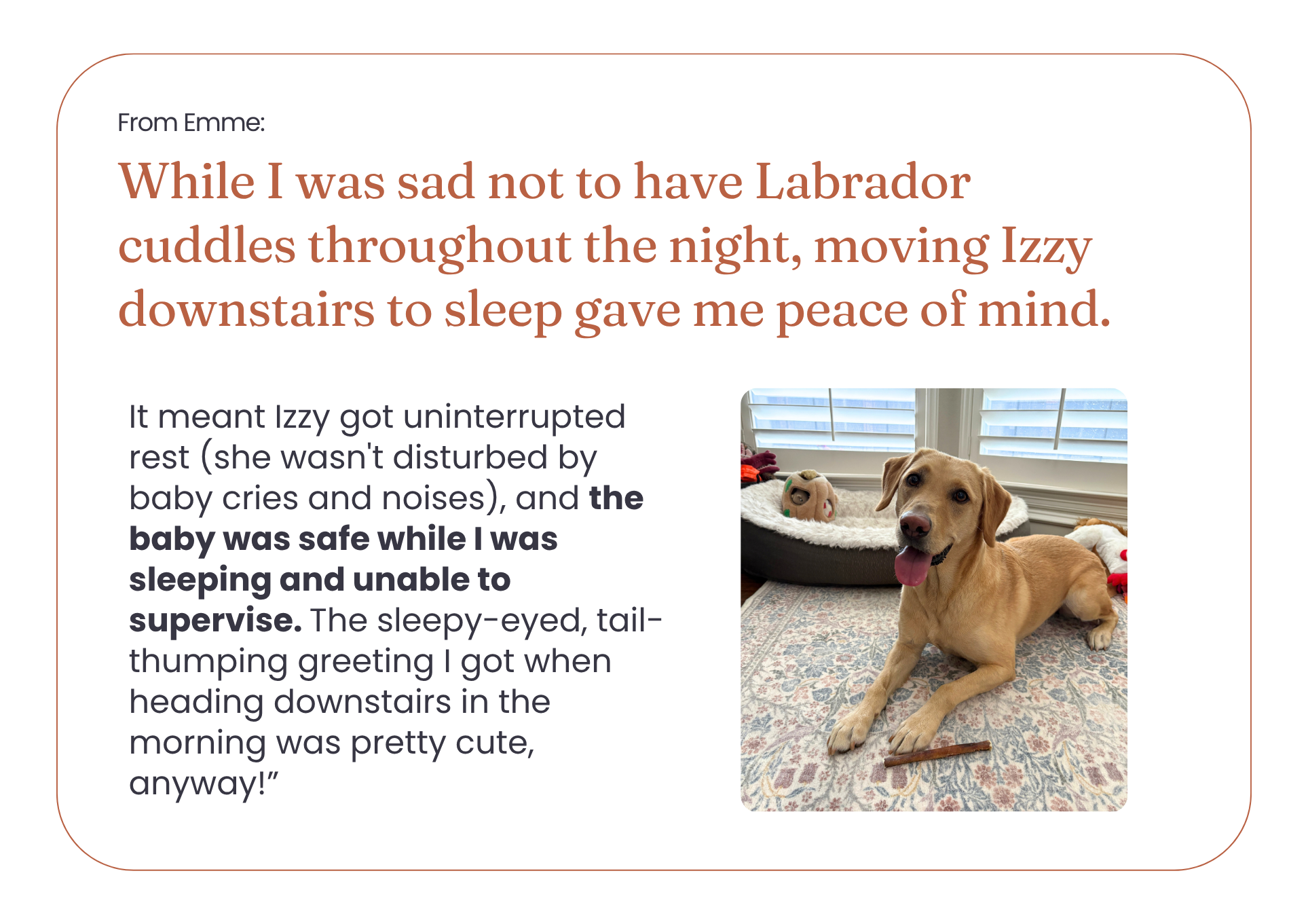
If you need help arranging safe sleeping setups and transitioning the dog off your dog bed or out of the bedroom, we cover this thoroughly in the Preparation Course.
Wearing a baby carrier changes your posture, silhouette, and movement patterns. Dogs often struggle with this new visual, especially when paired with crying or newborn noises.

Walking around the house wearing a doll (or a baby-sized stuffed animal) helps your dog get accustomed to the sight of the carrier on you and the novel body language or movements you make while babywearing. The more you practice before your baby arrives, the easier it will be. If your dog has never seen you walking and talking to a "crying baby" in a carrier, they will likely follow you closely, jump up to investigate, or get overly excited.

Dogs experience the world primarily through scent. By introducing the specific lotion or diaper cream you plan to use and pairing it with tasty treats, you build a positive association with that smell before the baby arrives.
Simply apply the baby lotion like hand cream and give your dog a treat, that’s it! If it’s playtime, smear a tiny bit of diaper cream on your hand right before playing. Remember Dominika’s motto: use your current routines to your advantage. Check out how Dominika does it in this reel.
Nursery rolling carts keep essentials organized and accessible. Storing dog treats alongside wipes, diapers, and postpartum care items allows you to reward good behavior, like going to their bed while the baby is crying or being changed, without searching for a reward. It’s always within arm's reach where you spend the most time.
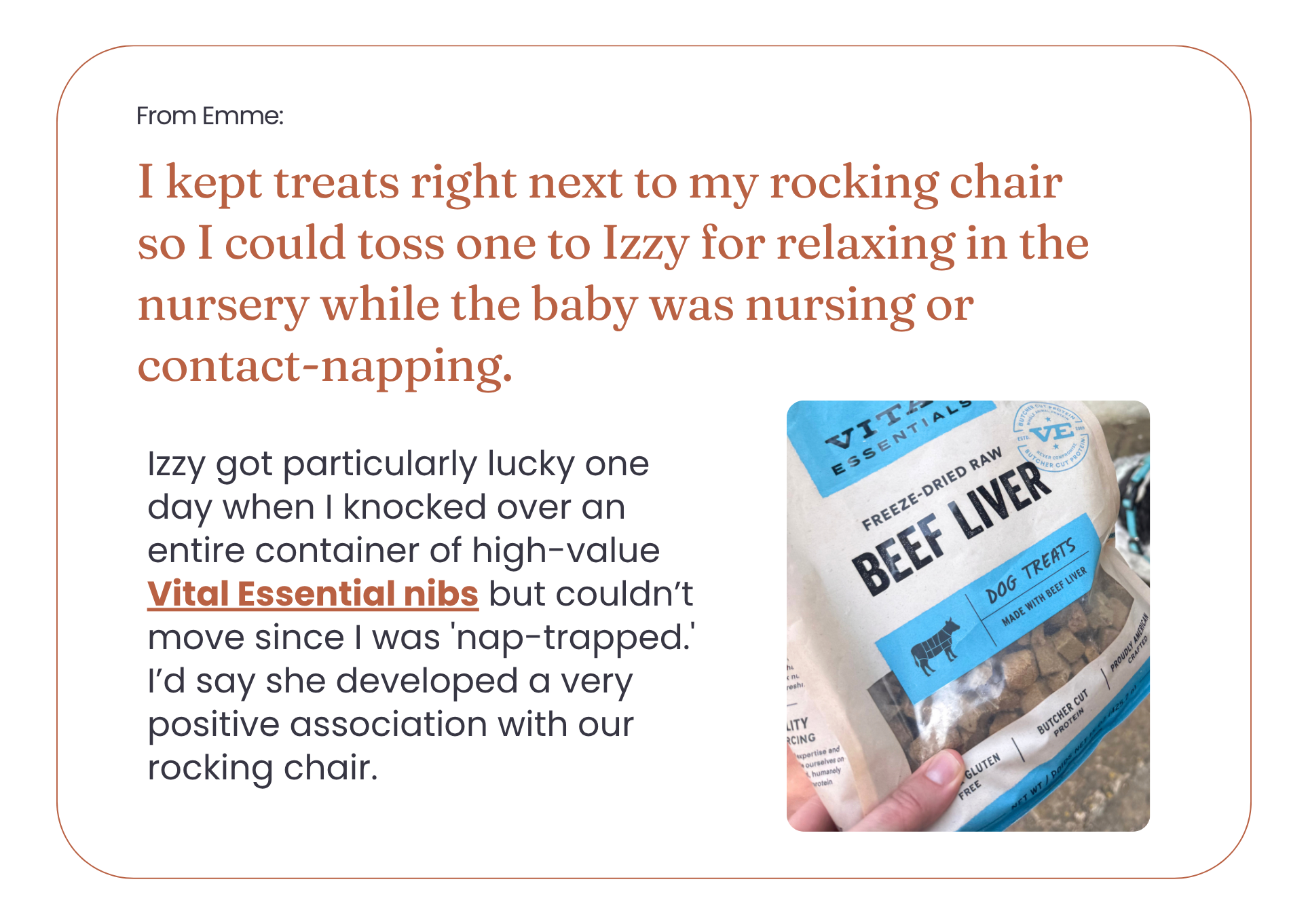
Shop Dog Meets Baby community favorite baby lotions and creams here.
"Go to bed" is the most frequently used management cue when living with both a baby and a dog. Investing in a comfortable bed your dog loves gives them a rewarding place to relax away from high-activity areas like changing stations or tummy-time spots.
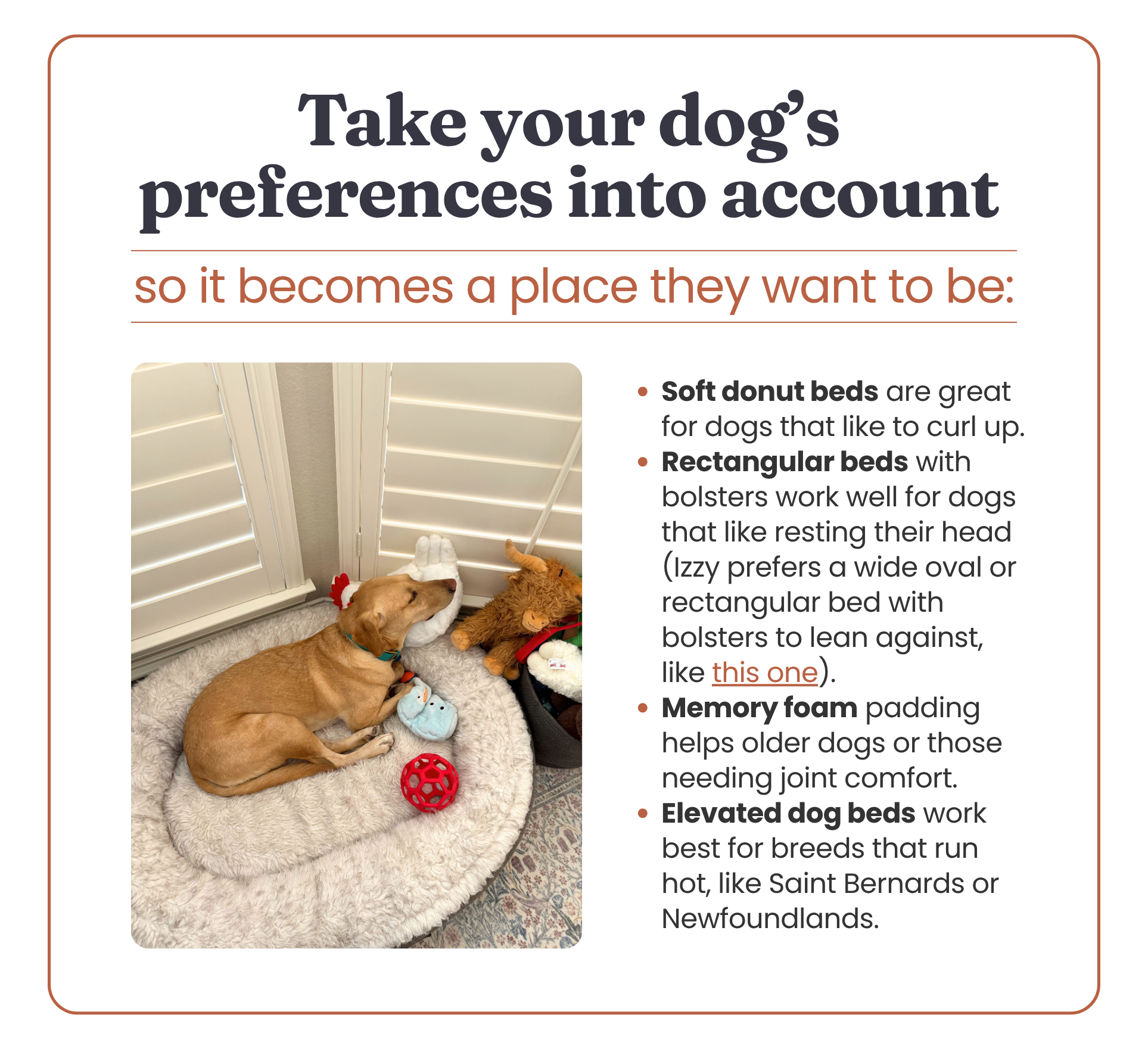
Many of my clients with smaller dogs swear by donut beds, while my Vizsla clients almost always go for the hooded dog beds.
For step-by-step tips on how to train the Place cue, check out this video.

Whether you prefer structured training sessions or training throughout your day, you need rewards your dog is excited about. If you do dedicated sessions, end them while your dog still wants more. Some dogs focus for 5 minutes; others can go for 20.
Use small treat pieces. If you're concerned about diet, you can use kibble from your dog’s mealtime, if your dog is motivated by it.
Pro Tip: Mix a few high-value, smelly treats with kibble in a Ziploc bag or container and let it sit overnight to infuse the kibble with flavor!
Note: A food-motivated Labrador might work for kibble, but a picky Cavalier may need higher-value rewards. However, if super high-value treats make your dog overly amped or unable to focus, save those for high-distraction environments and use low- to medium-value treats at home.
Low-value treats:
Medium-value treats:
High-value treats:

Ordering directly from Pupford website gets you the best price, and you can save an extra 10% with our code DMB10.
Treat Pouches
I like Bark Pouches, while Emme prefers Bark Bistro pouches. Both are fantastic options:
If you want step-by-step video guidance, Q&A access with Dominika, and entry into a private group for Dog Meets Baby parents, check out our Pre-Baby Courses. They cover everything from setting up your home, training essential cues, to the first meeting and navigating the first weeks home.
If you want to be more prepared for the 4th trimester or if your dog struggles with the newborn baby, we have an SOS Newborn Course.
You can also download our free Preparation Checklist to keep your pre-baby training plan organized and on track!

Start in your third trimester at the latest, and earlier if your dog needs extra practice, for example a dog who is anxious, jumpy, or nervous around new things. Short sessions work best. Emme practiced with her dog Izzy for 5 minutes, 2-3 times a day. The goal isn't a perfect dog by the due date. It's a dog who has already seen the gear, heard the sounds, and learned what to do. Our free Preparation Checklist helps you keep the plan on track.
No. We like to train with a doll because it makes the training more realistic for the parent, but not every dog needs a doll. A small pillow, or a bottle or stuffed animal wrapped in a baby blanket, roughly the size of a newborn, works too. A doll is most helpful if your dog reacts to people staring at them, is nervous around children or new items, or needs time to warm up. Carry it, wear it in a carrier, and put it in and out of the crib or stroller while you practice Place, Away, and Leave It.
Stop, and give your dog more distance. A growl is information, not defiance, so don't punish it. Go back to an easier step: lower volume, doll farther away, shorter session, and reward calm behavior. If your dog snaps, lunges, or isn't improving, work with a qualified trainer before the baby arrives. Dominika offers 1-on-1 Pre-baby Consultations.
Play recordings of newborn sounds, like crying and fussing, while your dog is doing something they enjoy, such as eating treats or working on a chew. Start quiet and short, and make it more realistic over time. Practice while you carry or wear a doll, so your dog learns what those sounds look like in real life and what to do. Our free Baby Sounds Library has tracks you can start with.
Introduce the gate slowly, and extend the time your dog is separated from you a little at a time. Choose a time when your dog will be more relaxed and napping, e.g., after a long walk, or exercise. Give them something great to do on the other side, like a stuffed puzzle toy, a chew, or… a dog bed they don't want to leave. Some separation is inevitable once you have a baby, and dogs who can't handle it can end up barking for hours, best practice before the baby arrives.
Focus on turning together, stopping at crosswalks, and keeping a loose leash. I like to keep treats in the stroller organizer so I can reward frequently at first for staying right by my side.
For our complete breakdown of gear and training steps, check out our full guide: Walking Your Dog and Baby.

Online resources to help your baby and dog get along—right from the start and as they grow up together.


.png)