
About

Products
Freebies

Teach toddlers "bubble space," the idea that every dog has an invisible bubble we don't pop. Introduce it through a book, narrate your dog's body language out loud, practice consent tests together, and use the same rule outside with other dogs and people.

Do you ever stand in your living room, watching your toddler heading straight for your dog, and feel your stomach drop? You aren't the only one. When you're navigating life with toddlers and a dog, managing that close-quarters energy can feel like a full-time job. We want our children and our dogs to be friends, but building a safe, lifelong bond means teaching our kids a fundamental concept early - respecting our (or any!) dog's space.
In our house, we don't say "leave Izzy alone" or "you're too close." Instead, we rely on a practical, visual framework my kids can easily understand and use throughout their day: Bubble Space.
What Is Bubble Space?
Bubble space is the invisible area around a dog that children learn not to "pop," so the dog always feels safe and can choose whether to interact. It gives toddlers a simple, visual rule instead of a constant stream of "no."
How Do You Introduce Bubble Space to a Toddler?
If you have toddlers, you know that shouting rules across a room rarely clicks. My kids learn lessons much faster when they're illustrated in a book. Stories give them a clear, visual anchor we can refer back to in real time.
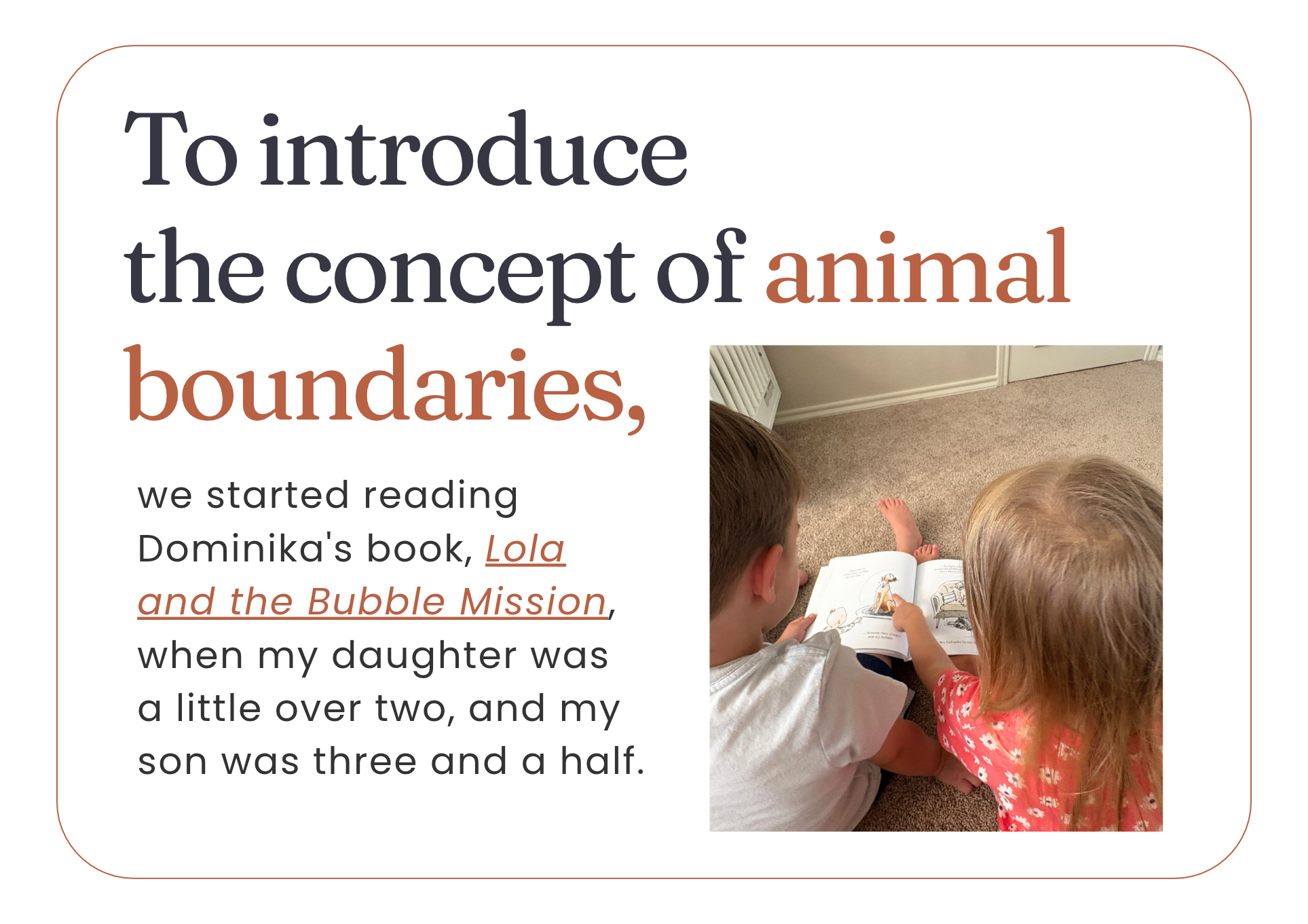
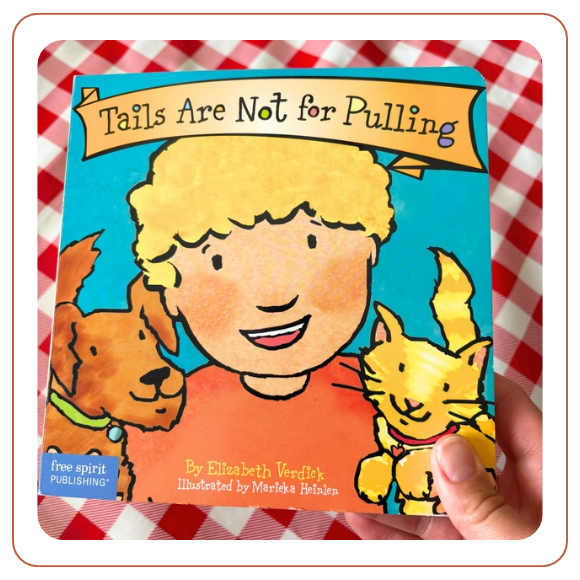
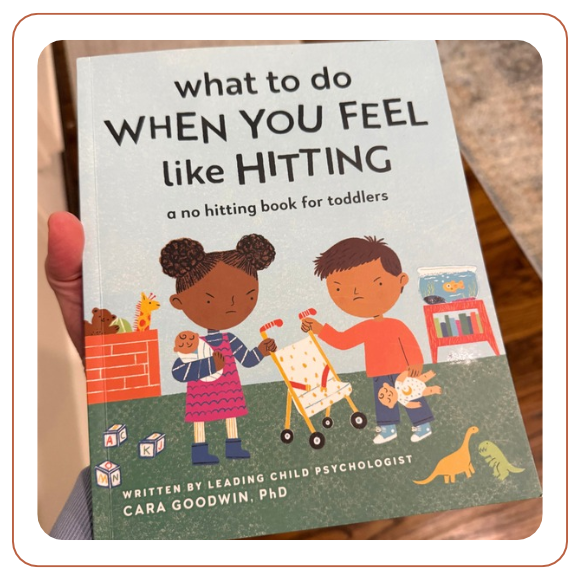
The book introduces a protective bubble around animals that we choose not to pop, because animals feel safe inside it. Lola's story helped my toddlers instantly grasp what "too close" actually looks like, and gave them a part in the bigger mission of respecting animals. We pair it with other boundary books, like Tails Are Not for Pulling and What to Do When You Feel Like Hitting, to address the big feelings and physical impulses toddlers often direct toward pets.

How Can Toddlers Learn to Read a Dog's Body Language?
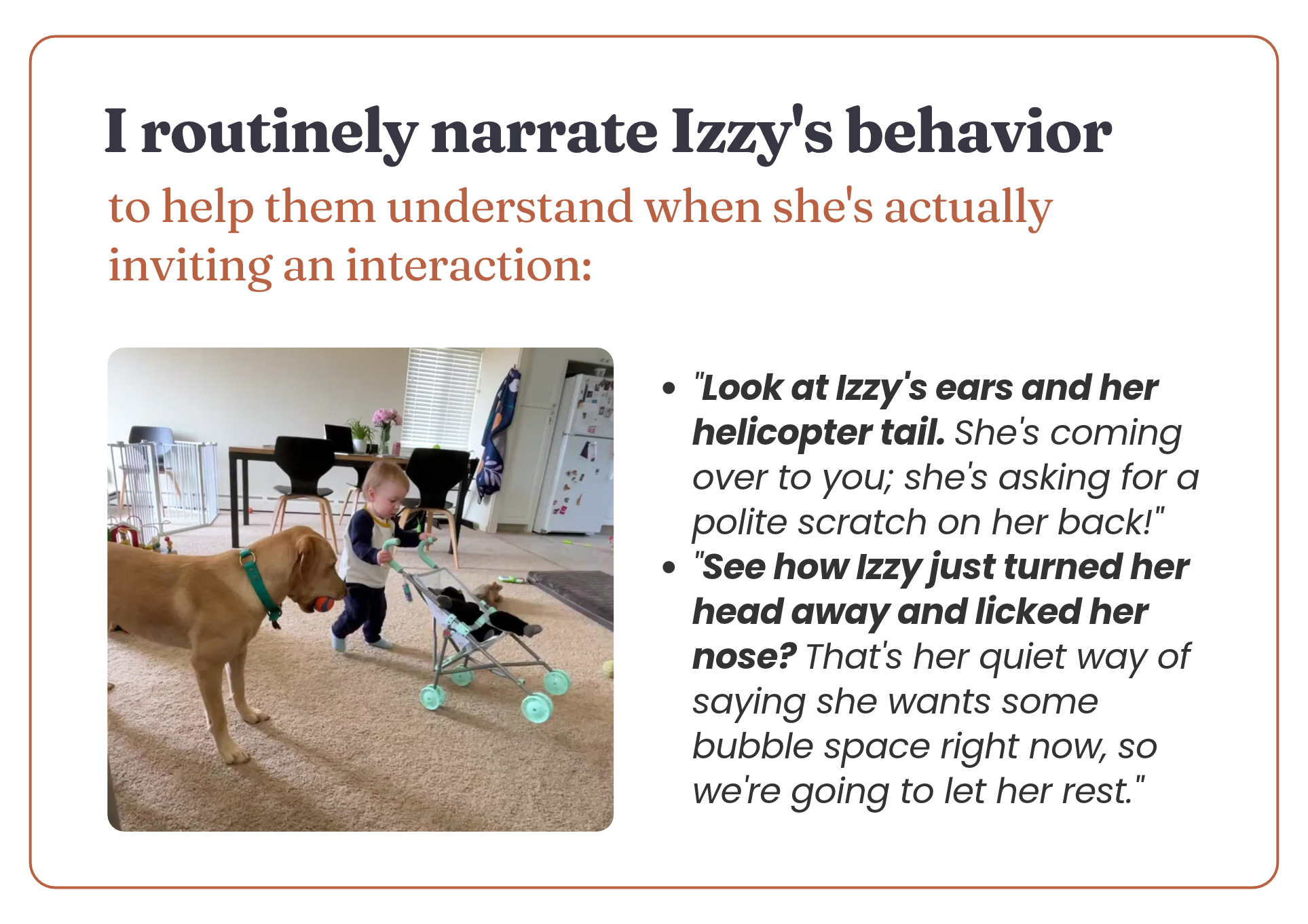
Once the concept is planted through stories, the real work happens in our everyday routine. Think of it as play-by-play commentary, just calmer. Instead of waiting for a boundary to be crossed and reacting with panic, I constantly narrate both my own actions and Izzy's subtle body language. This keeps safety front and center without creating fear or tension.
When I move through the room, I describe what I'm doing out loud: "I see Izzy resting, so I'm going to walk wide around her bed to give her bubble space."
More importantly, I act as a translator for Izzy's signals. Toddlers have no natural understanding of canine body language, so we need to spell it out for them.
Think you know how to read your dog's body language? Test your skills with our free Dog Body Language Quiz. Not sure what your dog is telling you? Our Dog Body Language Course shows you real videos of dogs and kids. Dominika breaks down each one and shares how to make the situation safer.
What Is a Consent Test for Dogs, and How Do Kids Do It?
Even when our dog looks approachable, we teach our toddlers never to assume. We practice "consent tests" regularly.
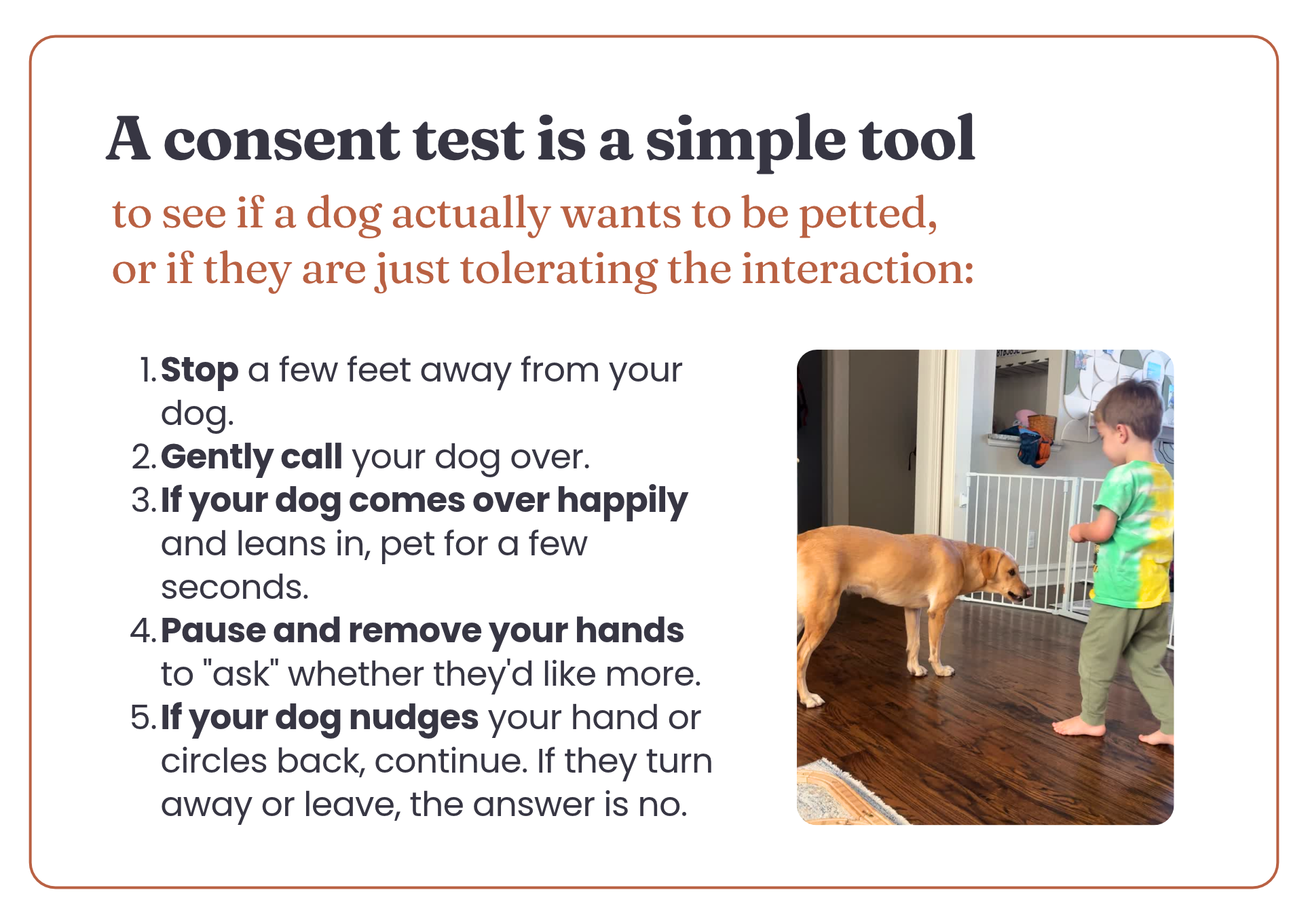
If Izzy chooses to move away, turn her back, or remain still, we celebrate that choice: "Izzy chose to stay on her bed, and that's wonderful! She's telling us she wants her bubble space, so we're going to respect her choice."
Even if a dog says "yes" at first, they can change their mind mid-interaction, and a consent test helps us listen.
Watch Dominika's kids do consent tests and Emme's kids practice consent tests and bubble space.
How Do You Teach Toddlers Safety Around Unfamiliar Dogs?
The beauty of teaching "bubble space" is that it doesn't stop at our front door. Once my toddlers understood the concept with our own dog, we began actively reinforcing it when we encountered other dogs on our public walks or at the local park. When a loose or leashed dog passes by, we practice checking in with our surroundings.

The Bigger Picture: Raising Community-Minded Kids
As my toddlers grow, I've realized that "bubble space" isn't just a dog safety tool. It is a foundational lesson in building a community-minded outlook. We use this exact same framework to discuss the bigger picture of respecting space for other people and animals alike.
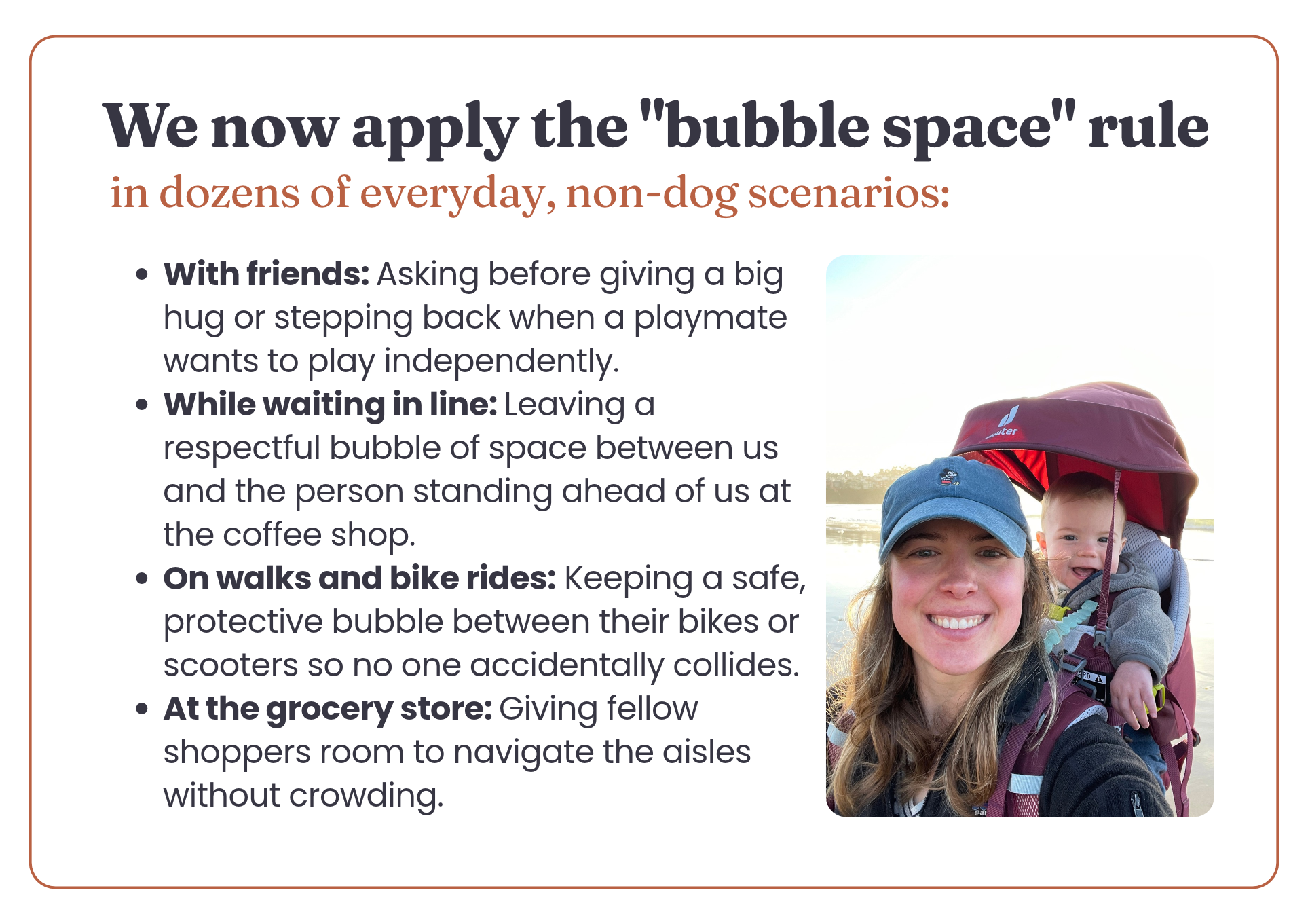
Relationships grow best when both sides feel entirely safe. By turning personal boundaries into a game, a story, and a community value, we aren't just protecting our dog. We are raising empathetic, respectful children who know how to read the room and care for the world around them.
FAQ
At what age can toddlers learn bubble space? We introduced it when my daughter was just over two, and my son was three and a half. Toddlers grasp it fastest through a story with a clear visual, like the bubble in Lola and the Bubble Mission, combined with daily practice.
What should I say instead of "leave the dog alone"? Describe what the dog needs instead: "Izzy is resting, so let's give her bubble space." It tells your child what to do, not just what to stop.
What are signs a dog wants space from a toddler? Common signs include turning the head away, licking the lips or nose when they're not eating or expecting food, yawning when not tired, showing whale eye (the whites of the eyes), or walking away. If you see these, give your dog space.
Should toddlers pet unfamiliar dogs? We teach our kids to give unfamiliar dogs bubble space and let them pass. Many dogs don't want to be touched by children they don't know, especially on a leash, where they can't walk away.
Want a Real Plan for Your Toddler and Dog?
The mobile toddler phase doesn't have to be filled with guesswork and guilt.
Download our free Toddlers and Dogs Guide, or explore our Baby & Toddler courses, including 9 scripts by behavior specialist Caley Kukla, M.Ed., for exactly what to say when your child grabs, hits, or chases your dog.

Online resources to help your baby and dog get along—right from the start and as they grow up together.


