About

Products
Freebies

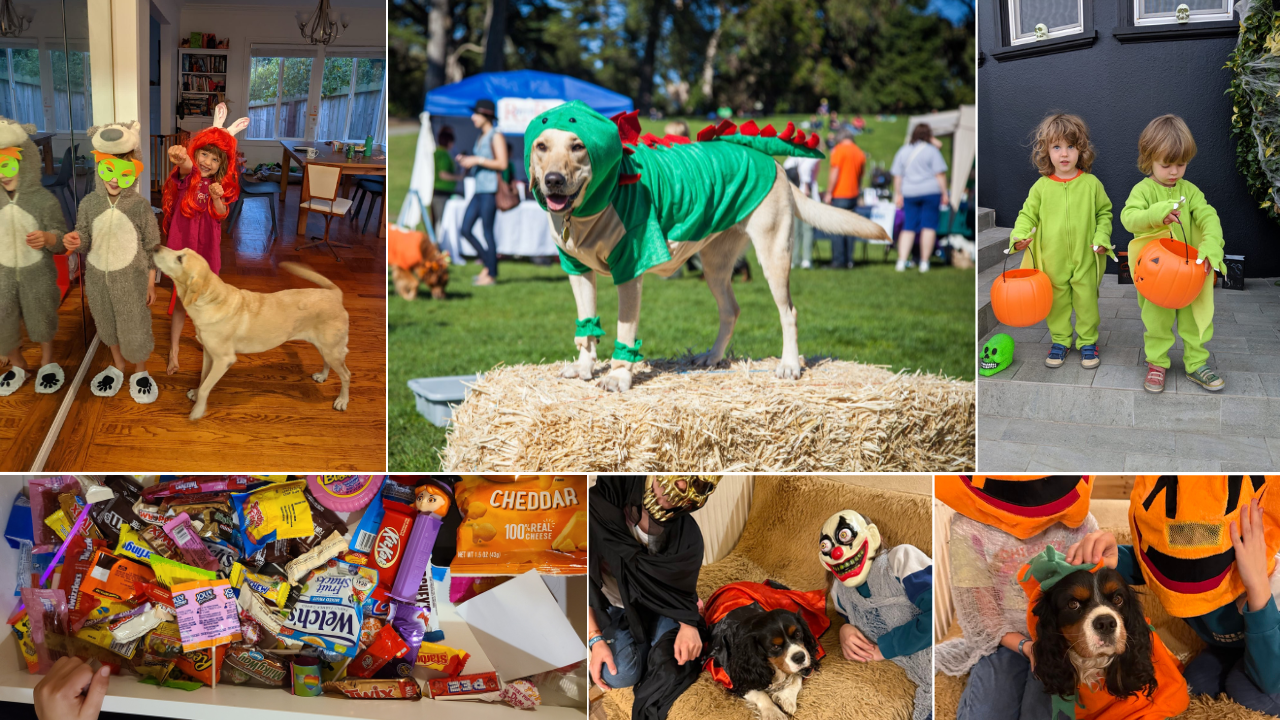
You may not be the only one getting spooked this Halloween; your dog might feel a little overwhelmed, too! Costumes, doorbells, candy, and chaotic fun can be a lot for our canine companions.
Wondering how to help your dog feel comfortable while still enjoying the festivities? Here are some dog-friendly Halloween tips and tricks to keep everyone safe and happy, whether you're heading out for trick-or-treating or staying home to hand out candy.
Before dressing up your pup, make sure they actually enjoy wearing clothes or accessories.
Here’s how to tell if your dog is comfortable in a costume:
✅ Approaches you willingly when you pick up the costume
✅ Wears it with a relaxed, wiggly body
✅ Keeps moving and behaving normally right away or quickly after the costume is on
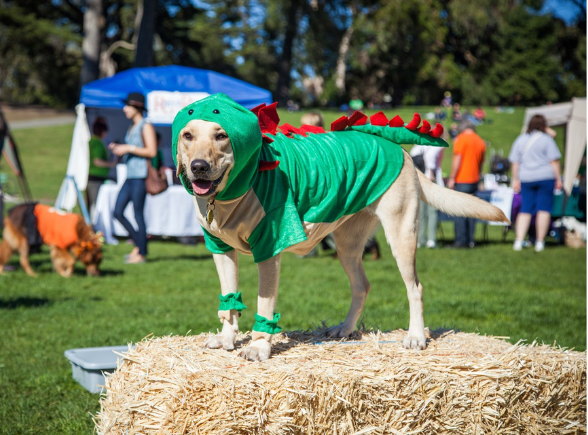
If your dog isn’t a fan of costumes, skip it! Instead, try a festive collar, leash, bandana, themed treats, or a spooky toy. We don’t want to put our dogs in a costume unless they LOVE IT - NOT BARELY TOLERATES!
Planning on dressing them up? Be sure to pick a costume that does not limit their movement, sight, or ability to breathe.
Absolutely no masks on dogs.
Never leave your pet unattended in their costume as they may chew off loose fabric or small dangling objects. Try practicing ahead of time—pair the costume with some treats and praise to help them adjust through cooperative care training.
Make it clear for the kids that dressing the dog is a special occasion and an adult must put the costume on.
Many children love pretend play, and have many fun costumes and masks at home.
Our rule is: they can dress up their dolls and stuffed animals, but never the dog.
Even social dogs might get overwhelmed by crowds of excited, costumed children. Running, yelling, and unfamiliar outfits can push some dogs past their comfort zones quickly.
Consider the following:
*Desensitization exercises may look something like having your kids wear their costumes while the dog gets treats from across the room behind a gate or barrier. Then, the kids can come a bit closer while the dog is still receiving treats. Then the kids might start walking just a few feet from the gate (still involving treats). Then the barrier comes down and the dog and kids can interact or play normally with the costumes in view (and there’s still treats….).

If at any point your dog becomes visibly uncomfortable, stop and go back to the “easier level” of the exercise OR rethink the plan to take the dog out on Halloween night.
It is important to go at your dog’s pace, meaning short practices over the course of a few days or weeks. Unless it’s a puppy, most adult dogs will typically need slower exposure.
The goal of this exercise is to expose your dog to the costumes while pairing it with something positive, the treats! This way, we’re working on creating a positive association with the activity.
Need help reading your dog’s cues?
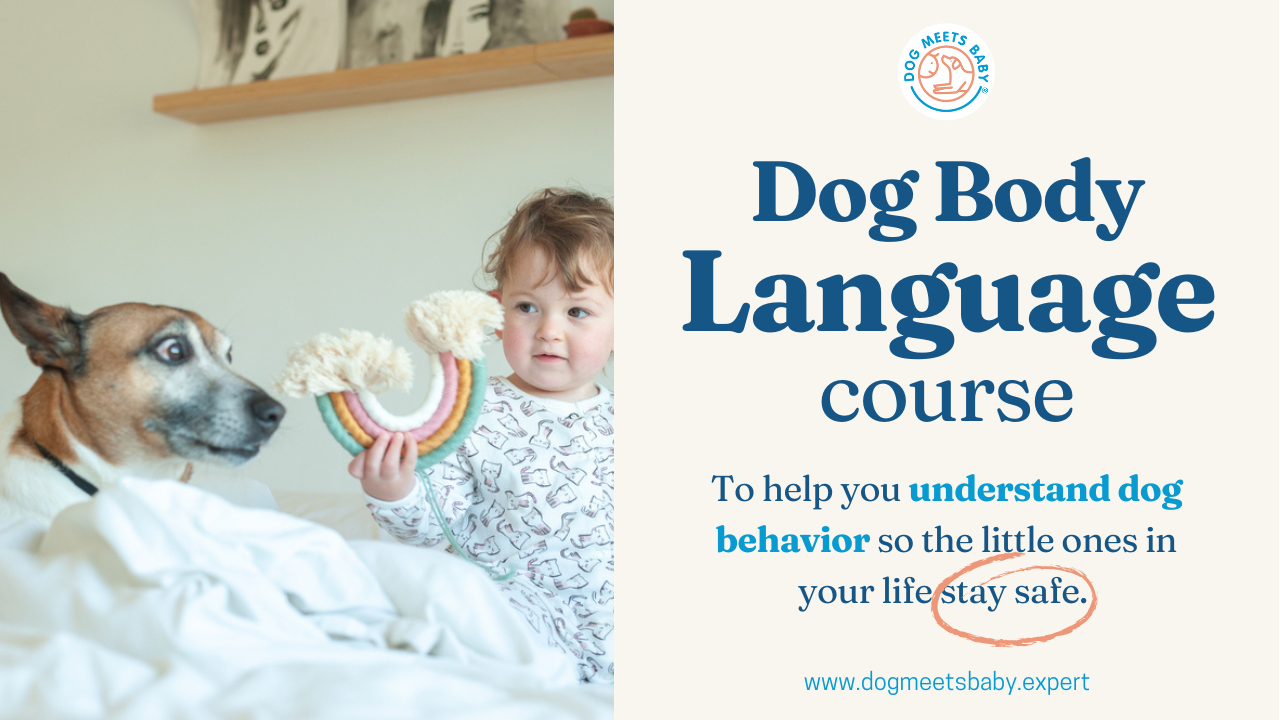
Check out the Dog Meets Baby Body Language Course and our post on the Canine Ladder of Aggression.
Choose your trick-or-treat timing and location wisely. A story from Dominika: “5 years ago, we took Lola trick-or-treating with us at 4pm on a quiet street. Lola was a well socialized dog, not afraid of unusual objects, sudden sounds, or movements. There were very few people and it felt more like a regular walk. However, Lola didn’t join us when we went trick-or-treating in one of the most popular neighborhoods in San Francisco. It would have been way too much.”
Here’s what to aim for:
As always, listen to your dog and involve them only to the extent that they remain comfortable.
Is your dog helping you hand out candy? Cute, but safety comes first.
Even outgoing pups can get startled or overly excited by the fast pace, costumes, or noise.
Tips for a smooth night at the door:
Don’t assume every child knows how to interact with dogs. You can help guide the interaction:
“Doggie would love a wave or air kisses from there!”
“You can pet her on the back like this.” (Gently demo slow strokes with two fingers or the back of your hand.)
Want visuals? Check out a dog happily greeting kids here or the lab in this video.
If your pup is happier chilling at home, a designated safe space is the way to go.
Here's what to do:
Pro tip: If your dog reacts to the doorbell, consider setting up a treat station outside or hang out on the porch instead of having visitors ring. You could also temporarily fully disconnect the doorbell for added peace of mind. Ideally, your dog will be so comfy in their room, they won’t even know about all the goblins and ghouls visiting their doorstep.
If you know your dog struggles enormously on social holidays like Halloween, consider speaking to your veterinarian about situational medication for the event. Concerning stress signals could look like (but are not limited to) constant pacing, shaking, inability to settle, agitation, panting, or behavioral shut-down.
Between sugar highs and costume chaos, don’t forget: CHOCOLATE AND CANDY ARE TOXIC TO DOGS.
Keep Halloween sweet but safe:
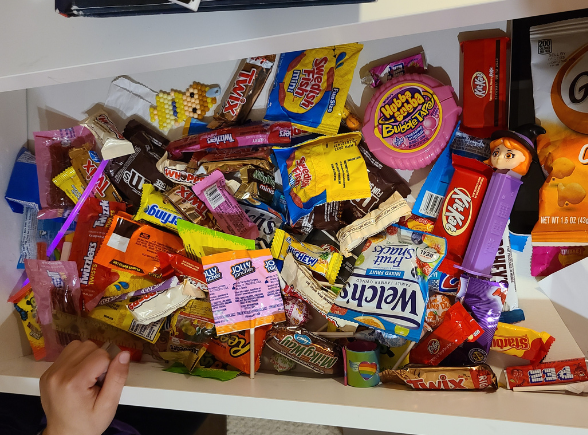
Check out this list of common toddler foods toxic to dogs for more pet-proofing help.
IF YOUR PUP GETS INTO CANDY...DON'T WAIT – CALL YOUR VET OR THE ASPCA ANIMAL POISON CONTROL CENTER (888-426-4435) RIGHT AWAY.
Other resources:
1. ASPCA Animal Poison Center - has excellent info on animal poison control.
2. Poison List - type in the item your dog ingested to see if it is on the list.
3. If you are a member of HomeAgain, you have free access to their private Poison Control Helpline.
If you and your dog are hitting the neighborhood after dark:
Need gear? Check out our Amazon “Dogs After Dark” collection for safety accessories.
Dog Meets Baby’s team favorite: GO2 Multi-Color Dog Light. Compact, waterproof, and USB-rechargeable, it keeps your dog visible up to 5 km, perfect for nighttime walks.
Whether your dog is tagging along for trick-or-treating or enjoying a cozy night in, a little planning goes a long way to keep them safe and stress-free.
Wishing you and your furry friend a fun, safe, and spooky Halloween!
Online resources to help your baby and dog get along—right from the start and as they grow up together.