
About

Products
Freebies

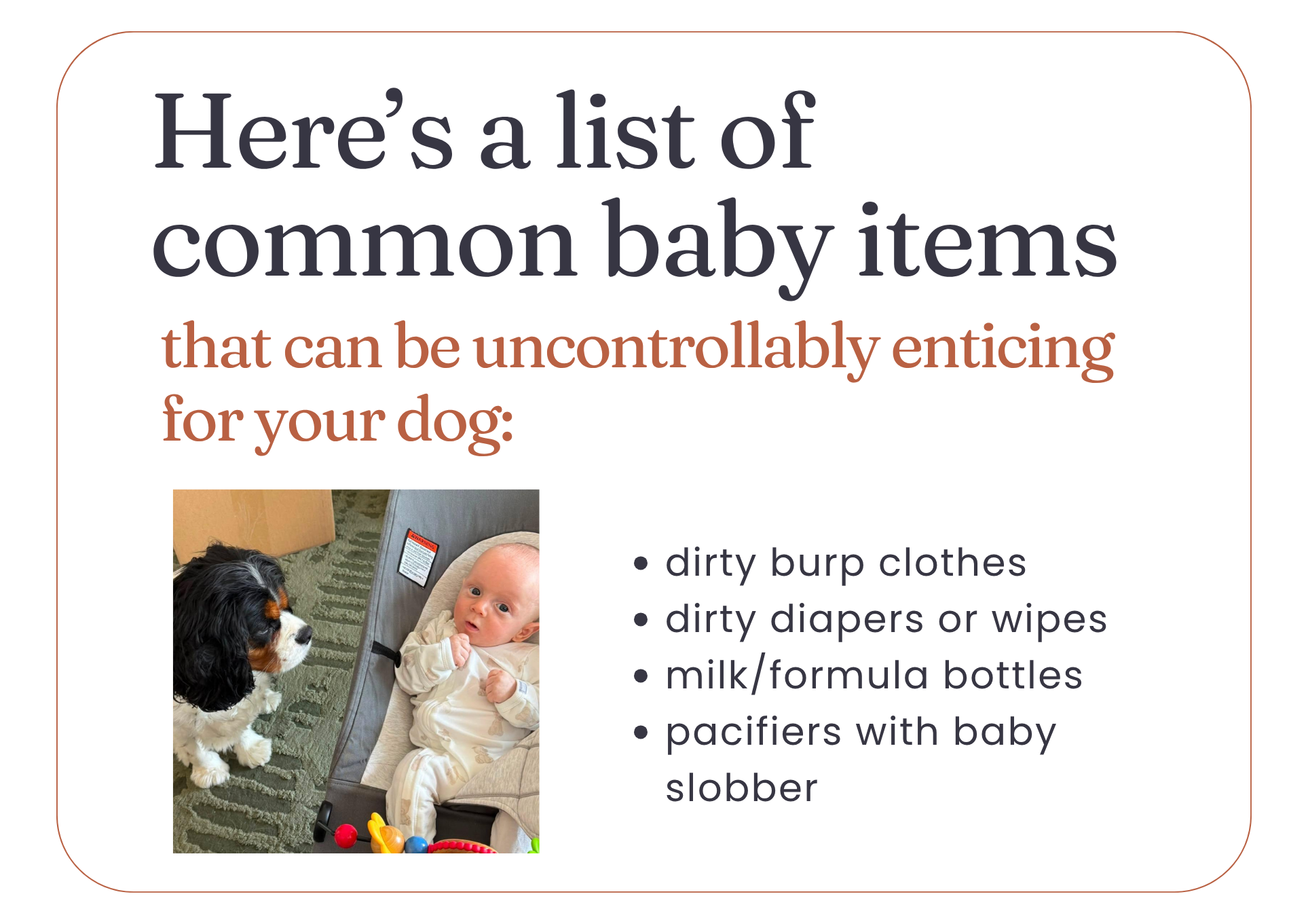
Does your dog steal your baby’s toys, diapers, pacifiers, or clothes? Sometimes you get lucky, and your dog magically KNOWS not to touch the baby's toys. But if you’re like most, you need a strategy for keeping your baby's stuff out of your dog's mouth, and your dog out of harm's way.
Dogs steal baby items for predictable reasons: novel smells, boredom, and the attention that chasing them earns. The fix is a mix of training (Leave It and Drop cues) and management (gates and separate zones), not punishment.
Baby toys are very tempting to dogs and often look like their toys, or even cooler!
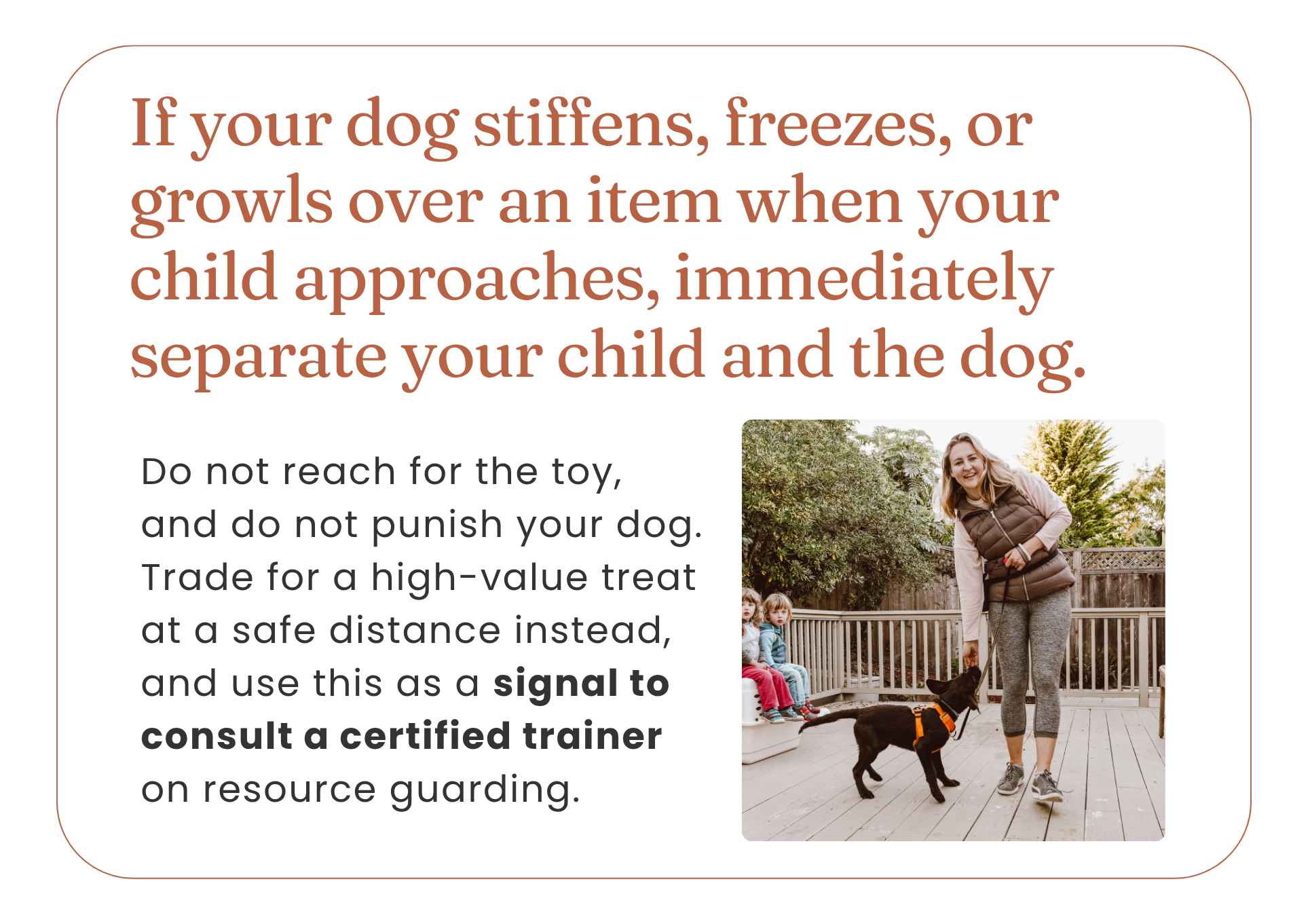
Expert Safety Note on Resource Guarding:
Your dog may protect a stolen toy from your child or you. Many dogs that protect their toys or other valuable items from other dogs will show the same protective behavior toward young children.
1. Don't give your child squeaky toys if your dog is obsessed with them.
Watch out for possible choking hazards: Some baby items look like toys, and some have small pieces (e.g., a chew necklace made out of silicone beads or teddy bear eyes) that could be a choking hazard or cause an intestinal blockage.
2. Provide appropriate chews: If your dog steals wooden toys and chews on them, get them their own chew! Check out our blog post on the best safe dog chews.
3. Teach your dog “Leave It” and "Drop" cues: Not sure how? Watch this short training video of me teaching 6-month-old Rosie the Leave It Cue.
4. Teach your dog which toys are theirs through redirection: Be consistent!
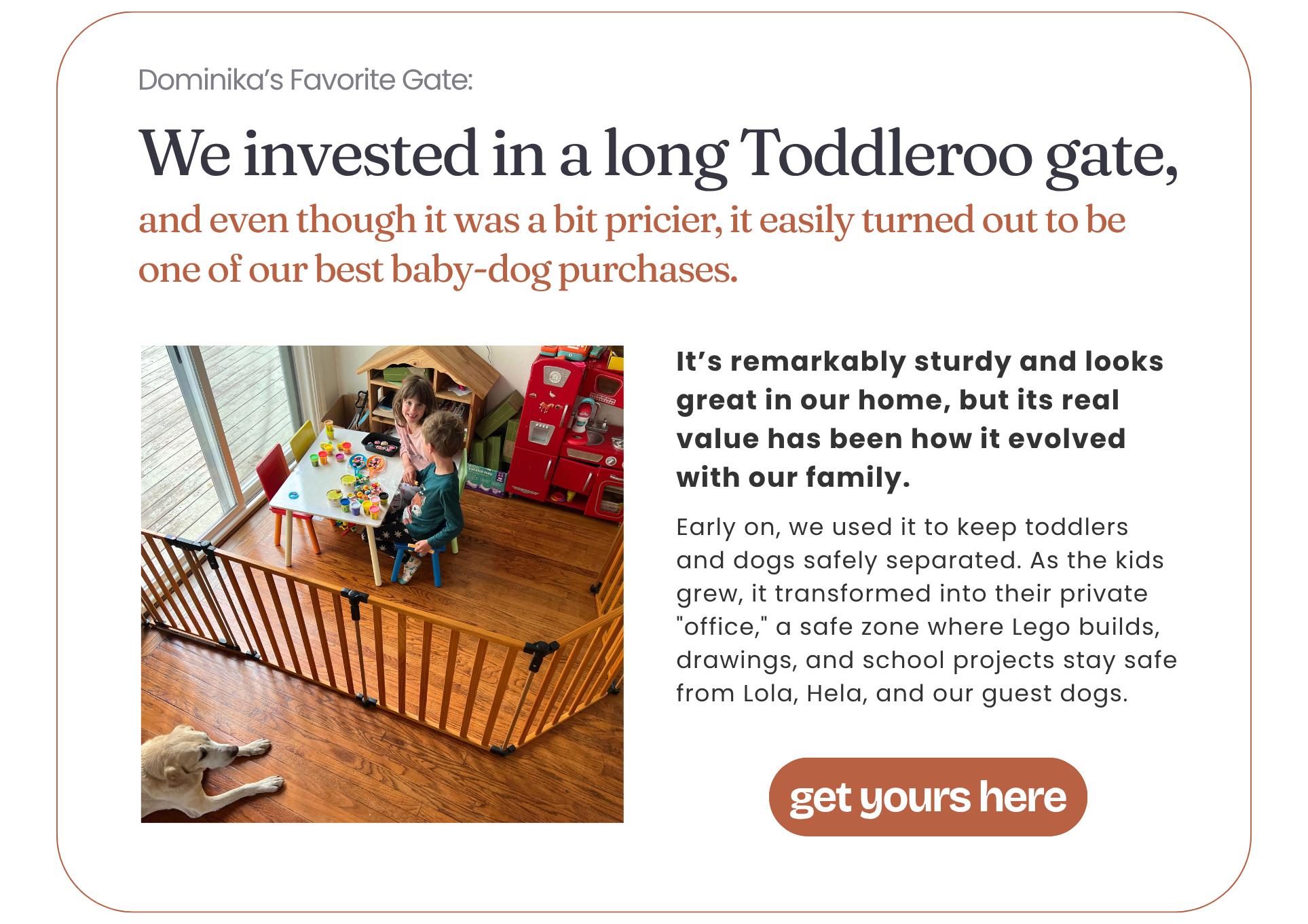
5. Gates, gates, gates! Use baby gates to separate spaces. Go to the Dog Meets Baby Amazon Store to check out baby gates and playpens recommended by me, my clients, and my followers.
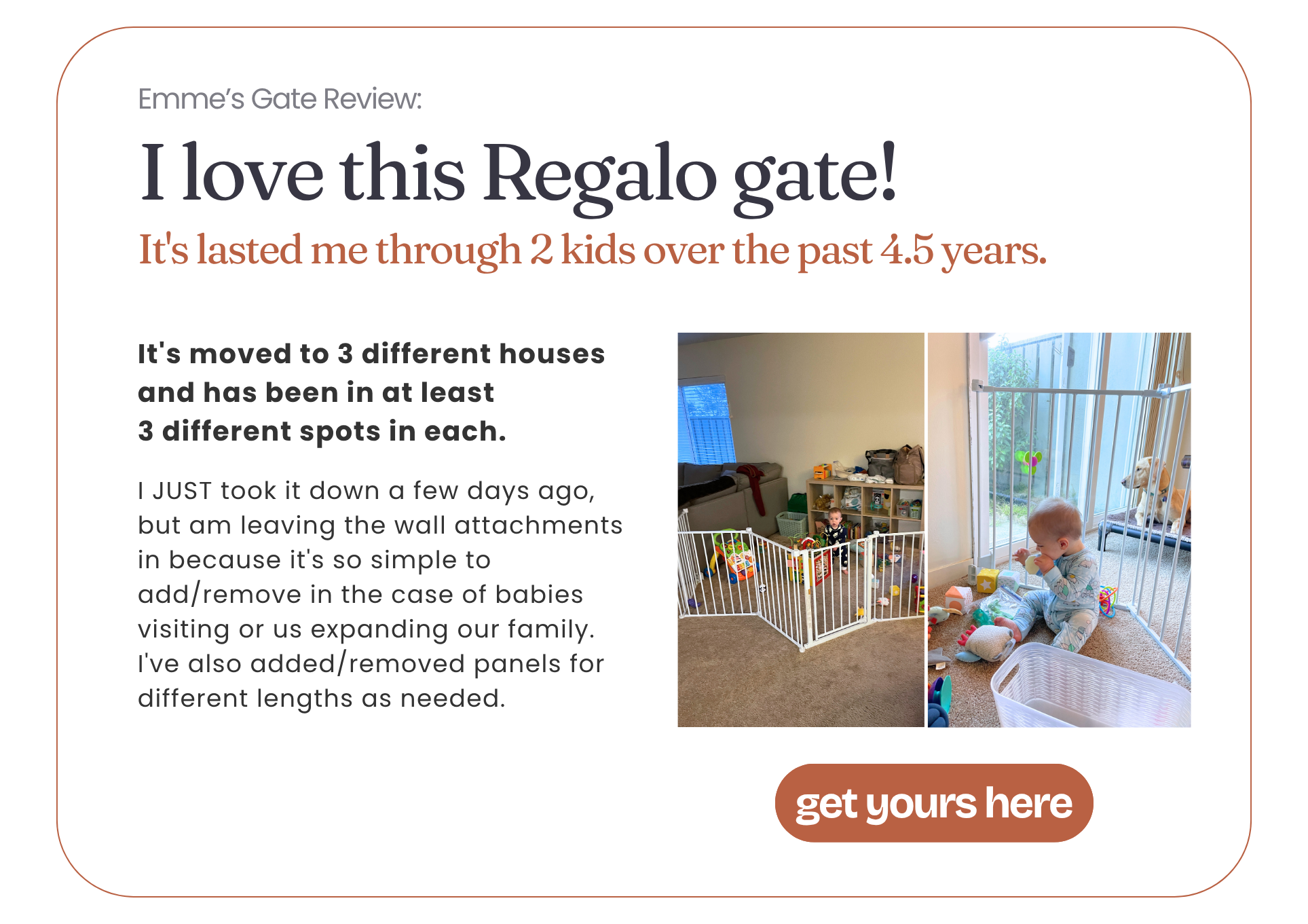
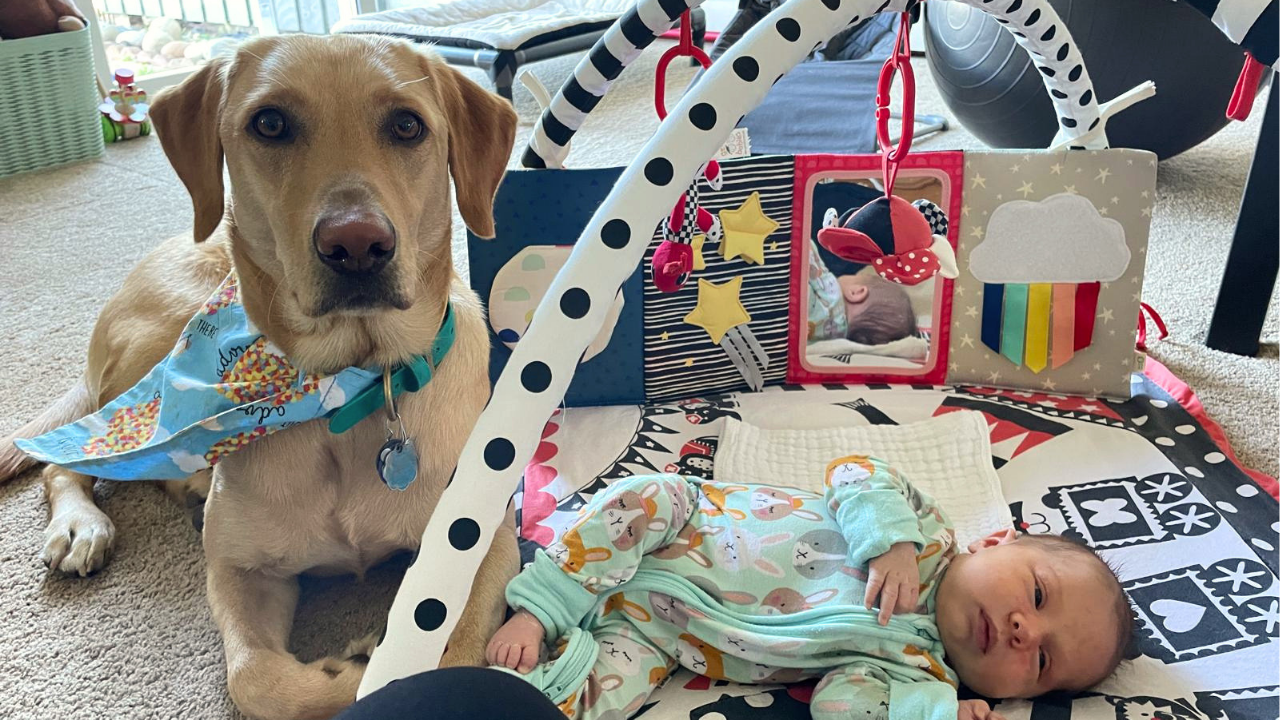
6. Create designated spaces for dogs and kids: Teach your dog that baby space is off-limits by practicing the Leave It cue, redirecting, teaching your dog to stay on their bed, and body blocking. This way, anything in the baby's space is off-limits, toys included.
Don't leave the activity mat out all the time, especially if you are not home and can't stop your dog from going on it. This video is from the Preparation Course. In the course, I teach you how to create baby and dog zones, and how to teach your dog to stay in their zone and not approach the baby’s zones.
7. Keep the most tempting toys out of reach if your dog is only interested in specific types of toys.
8. No stuffed or plush toys for your dog: Skipping plush dog toys helps your dog clearly distinguish between their toys and the baby's soft toys (easier done when you have a puppy).
Playing with toys is a great physical outlet for dogs and a fantastic bonding exercise. Establishing rules for toy play before the baby arrives will set your dog up for success.
If you and your dog like to play rough or if you have a ball-obsessed dog, set up structured play scenarios that prevent your dog from becoming mouthy, jumpy, or grabby around your baby. Cues like ‘drop,’ ‘leave it,’ ‘back up,’ and ‘stay’ make play sessions controlled, calm, and safe. You can also manage the environment by playing in a designated space away from your child.
The Secret to Hands-Free Sanity: Long-Lasting Chews & Puzzles
When you’re nursing, changing diapers, or playing on the mat with your baby, keeping your dog occupied with their own high-value items is a lifesaver.
To successfully redirect your dog away from baby toys, make sure you have the right gear on hand:
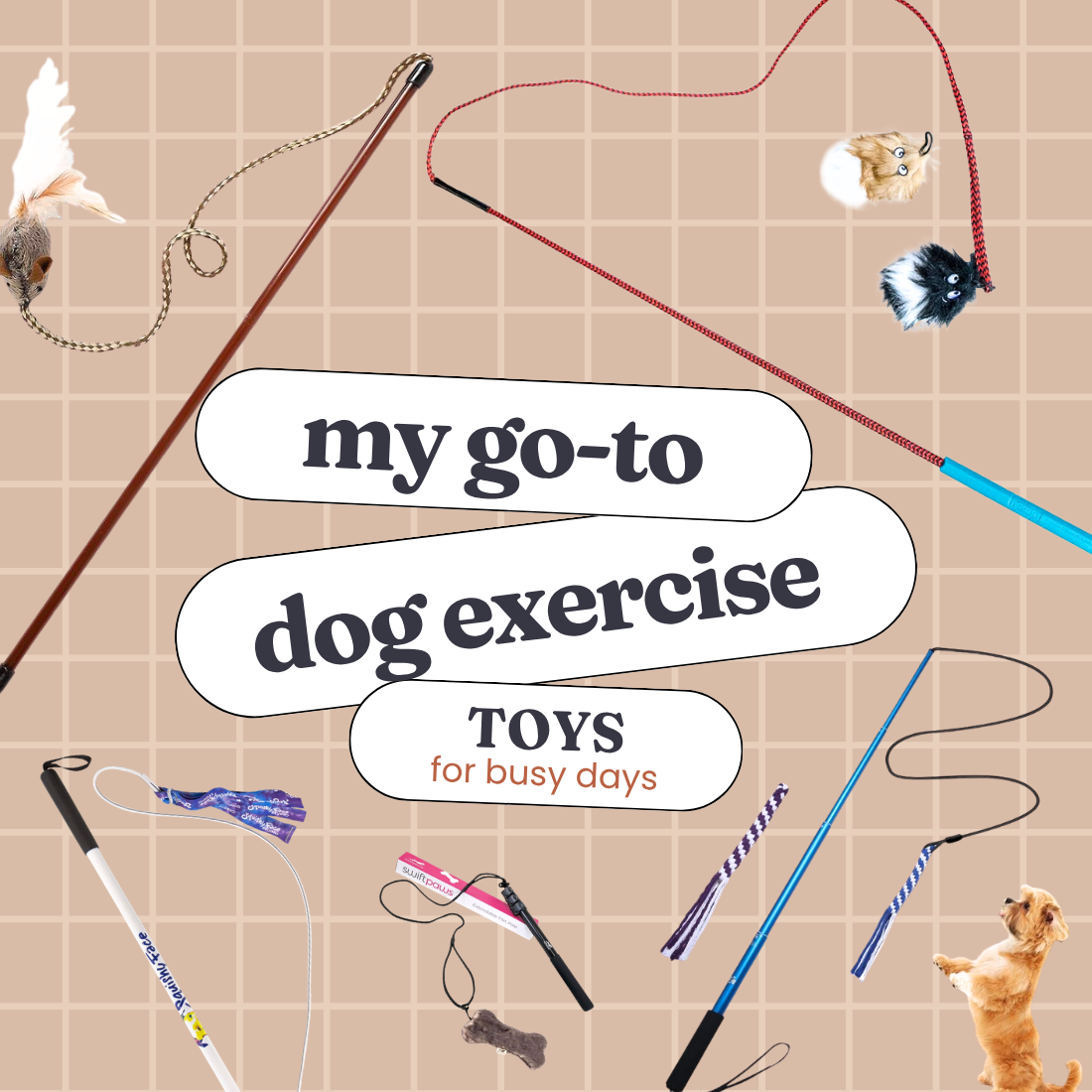
When you're short on time and need to burn off your dog's energy fast, a flirt pole is unmatched:
For tiny dogs, a simple cat wand toy works wonders!
So your dog is standing there with a stolen pacifier or baby sock. Whatever you do, don't chase them. Remember, many dogs care less about the item and much more about you chasing them. Chasing turns stealing into the best game in the house.
Instead: Stay calm, grab a high-value treat or one of their own toys, and trade up. If you've practiced the "Drop" cue, this is its moment. If the item is dangerous or toxic, trade fast and call your vet immediately if any piece is missing.
If your dog swallowed a piece or the entire baby toy, take a deep breath. You are definitely not the first parent to deal with this.
In a poll on Instagram, parents shared with me an impressive list of infant and toddler items their dogs have managed to ingest:
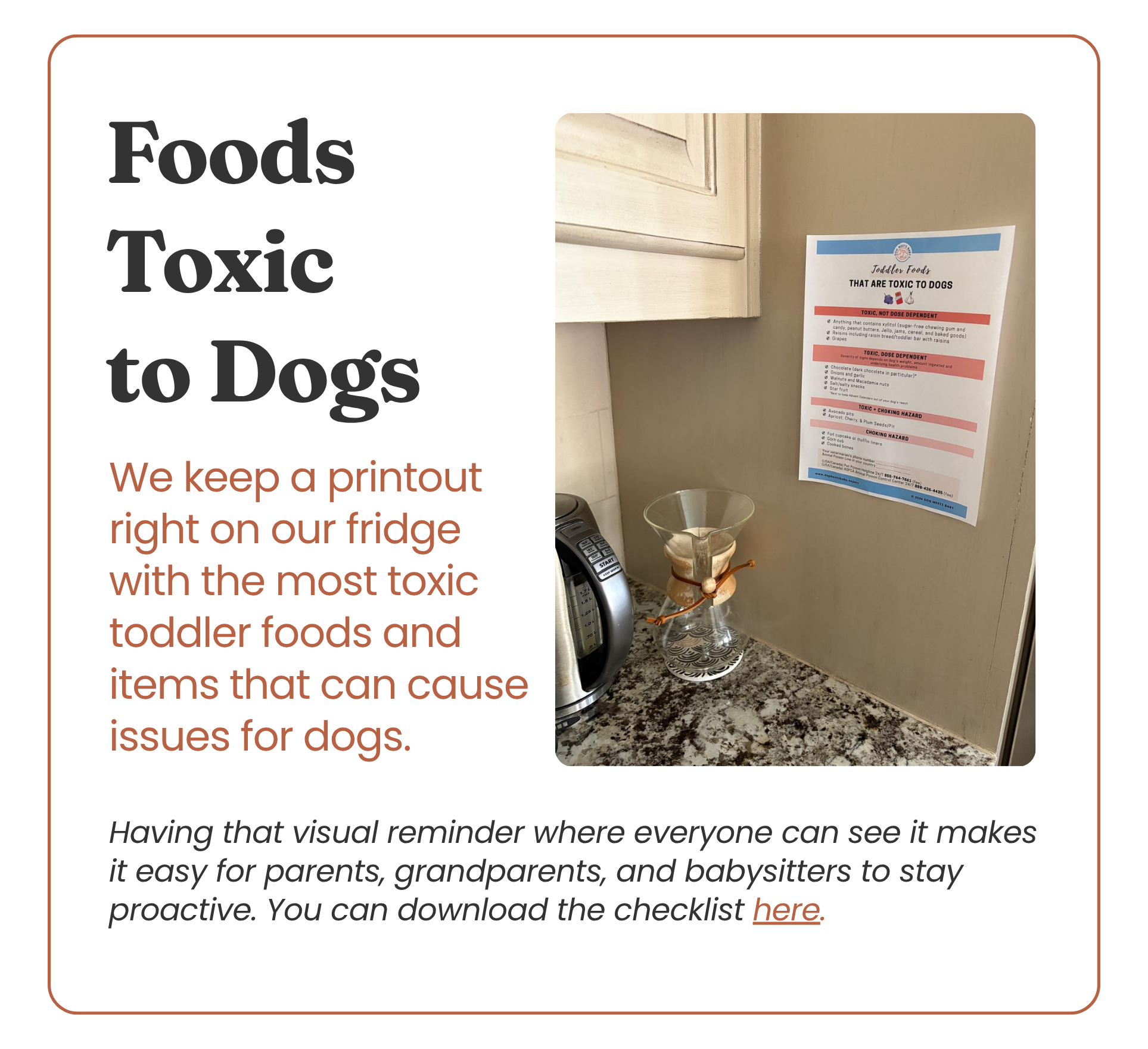
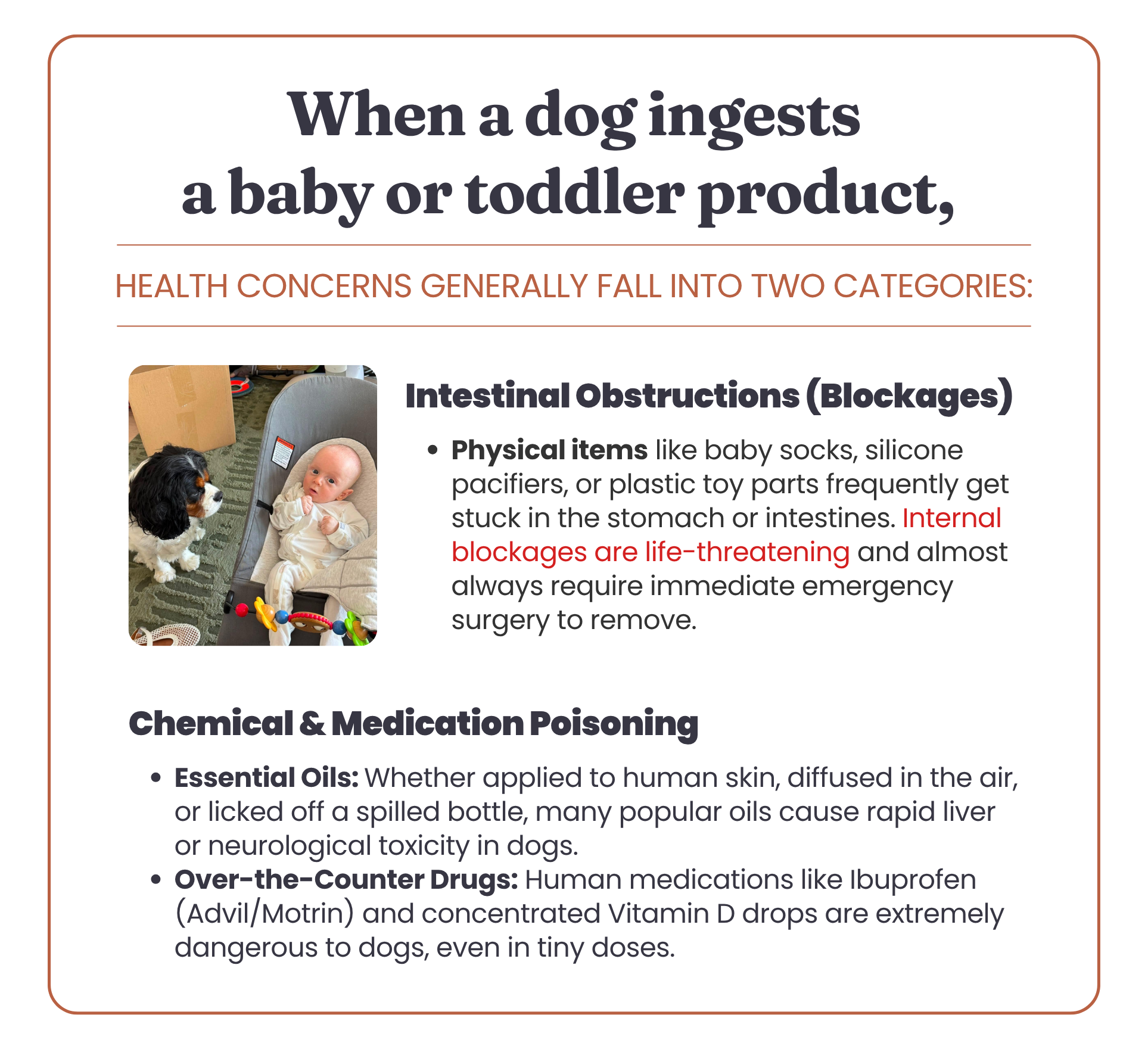
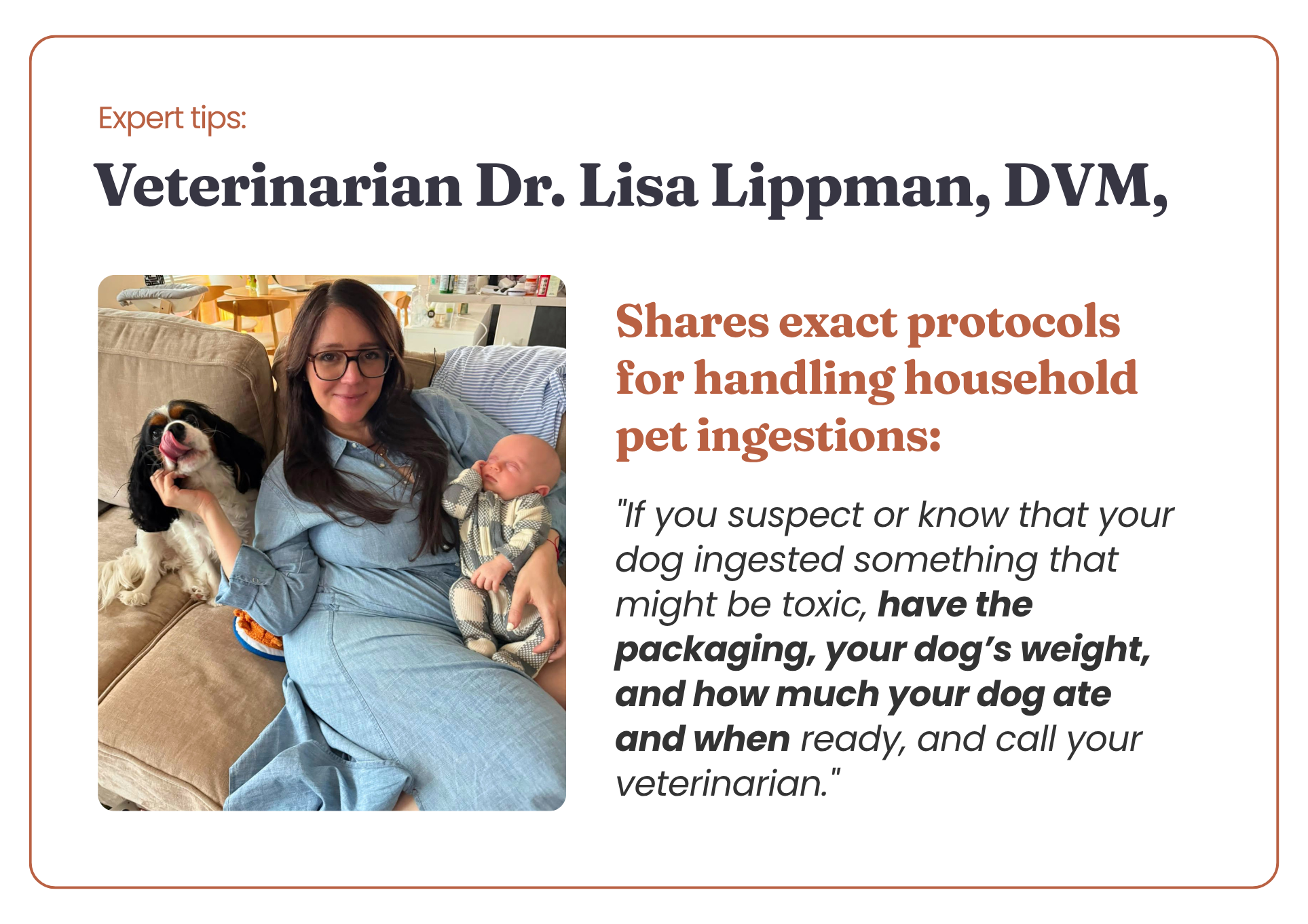
If you know or suspect your dog ingested something toxic, contact a 24/7 emergency poison control hotline immediately:
When you call, they calculate precise toxicity risks based on your dog's exact weight, the active ingredients, and the exact milligram-per-kilogram dosage consumed. They then generate a unique case number. When you arrive at the clinic, your treating doctor references that case number so the toxicologist can provide them directly with the exact, step-by-step treatment protocol, fluid rates, and necessary antidotes.
Money-Saving Tip: Most major pet insurance plans reimburse this fee under your claim!
Baby toys look like dog toys, carry enticing smells once touched by a baby, and many dogs learn that grabbing baby items wins your attention because you chase them.
Combine training and management: teach Leave It and Drop cues, redirect your dog to their own toys, use gates to create baby-only and dog-only zones, and keep the most tempting items out of reach.
No, for many dogs, the chase is the reward. Trade up with a treat or their own toy, and train the Drop cue instead.
Call your veterinarian immediately or contact the ASPCA Animal Poison Control Center at 888-426-4435 (or Pet Poison Helpline at 855-764-7661).
Even if an item isn't a chemical "poison," animal poison control centers specifically handle foreign object ingestions (like pacifiers, baby socks, or silicone toys) on their official emergency lines. Their team calculates whether the item poses a physical blockage risk or a hidden chemical danger (like xylitol in wipes or zinc in diaper cream) based on your dog's exact weight, and they coordinate a direct emergency treatment protocol with your treating vet.
Online resources to help your baby and dog get along—right from the start and as they grow up together.


